Proposal for Establishing a Joint Iran-Uzbekistan Technology Development Office Presented
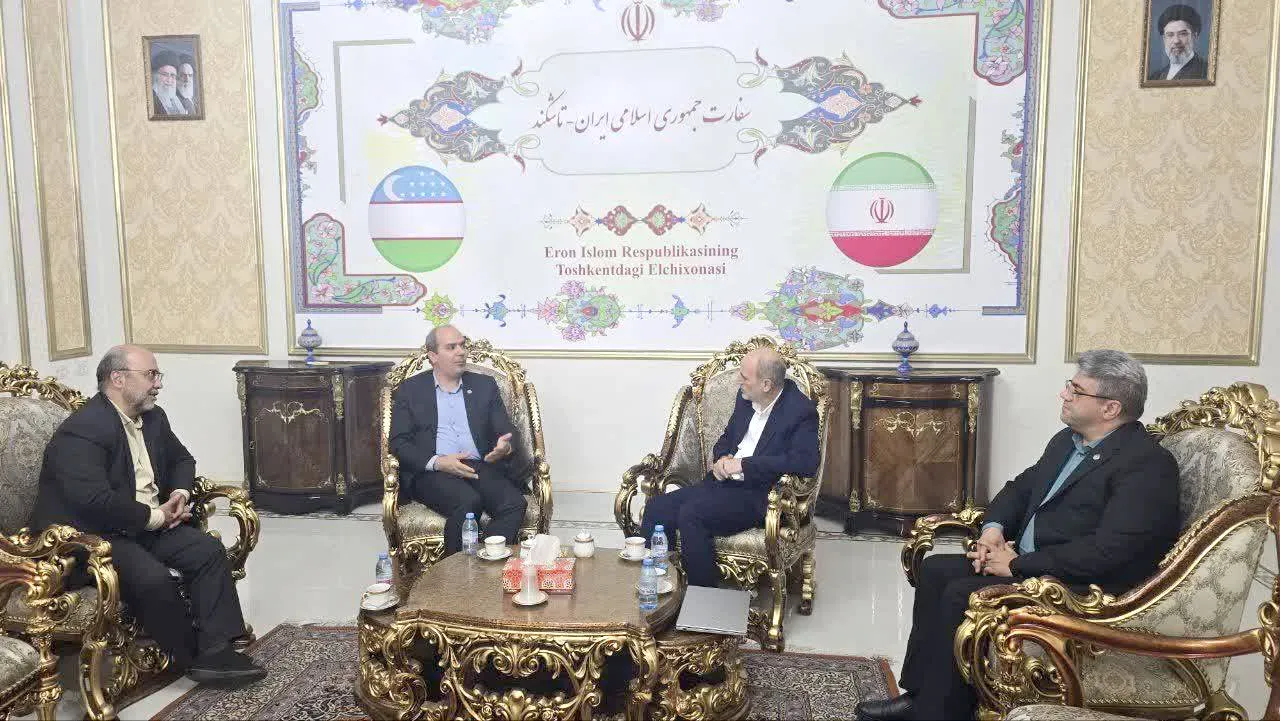
During a meeting with the Ambassador of the Islamic Republic of Iran to Uzbekistan, the President of Imam Reza International University announced the university's readiness to establish a joint technology development office. In this meeting, the necessity of linking knowledge-based companies with academic delegations for an effective presence in the Central Asian market was emphasized.
According to Astan News, Ali Eskandari, Ambassador of the Islamic Republic of Iran to Uzbekistan, in a meeting with the delegation dispatched by Imam Reza International University to Tashkent, pointed to the 127% growth in exports from Razavi Khorasan Province to this country and assessed the presence of academic and economic delegations positively.
Emphasizing the necessity for a stronger role of subsidiaries of Astan Quds Razavi in areas such as health tourism and technology, he added: "To succeed in the scientific and industrial market of Central Asia, academic delegations must be supported by the private sector and knowledge-based companies so that research projects lead to production and sustainable employment."
**Technology Development Instead of One-Way Knowledge Transfer**
Ebrahim Daneshfar, President of Imam Reza International University, also presented a proposal for launching a joint technology development office during this meeting. He described the university's approach as going beyond product sales or one-way knowledge transfer, stating: "In areas such as artificial intelligence, information technology, nanotechnology, and green hydrogen production, by defining a win-win game and combining Iran's design capacities with Uzbekistan's production facilities, we can achieve joint products."
He pointed to the university's successful experiences within the country, adding: "Precise projects such as evaluating the productivity and health of agricultural seeds using image processing, which was previously implemented for the Astan Quds Razavi Seed and Plant Company, have the potential to be localized and implemented in Uzbekistan's agricultural sector."
**Direct Linkage Between Education and Industry**
Continuing his remarks, Daneshfar outlined the educational model of Imam Reza International University in connecting students to the labor market, saying: "Currently, numerous industrial and technology companies sponsor our students, and the research and development projects of these companies are defined as course assignments at the university, a trend that has led to a rapid introduction of elites into industries."
Emphasizing the agility of this academic complex, the President of Imam Reza International University recalled: "Dependence on the scientific and cultural structure of Astan Quds Razavi has made it possible, far from common bureaucratic red tape, to swiftly dispatch specialists and elites to target countries."
**The Necessity of a Proper Understanding of Scientific Diplomacy**
Dr. Ebrahim Davoodi, Director of International Affairs at Imam Reza International University, also stated in this meeting that the experiences of the university in the global academic space is a special capacity for advancing scientific goals, noting that success in the cross-border arena requires a precise understanding of international mechanisms.
Referring to upcoming plans to strengthen this approach, he noted: "In line with the development of scientific diplomacy and foreign relations, a memorandum of understanding will soon be signed between this university and the School of International Relations of the Ministry of Foreign Affairs, so that specialized workshops and courses in this field can be held with the presence of experts and political elites."
**Scientific Diplomacy Based on Reciprocal Action**
In another part of his remarks, the Iranian Ambassador to Uzbekistan described inviting Uzbek authorities and professors to visit the scientific capacities of Mashhad as an effective strategy for developing interactions, stating: "Introducing the brilliant capabilities of Astan Quds Razavi in the fields of food industries, agriculture, and laboratories can pave the way for operational agreements."
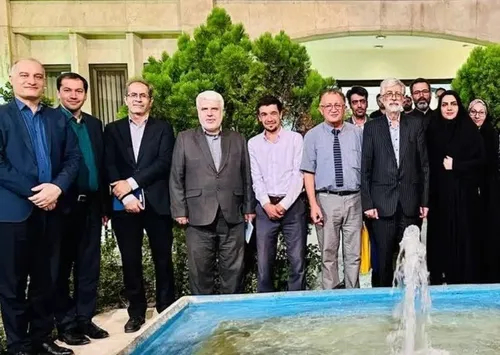
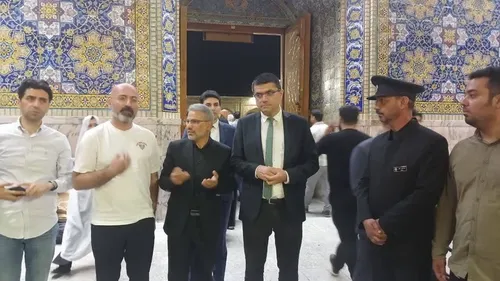
It is noteworthy that in this meeting, which was held with the presence of Dr. Ali Eskandari, Ambassador of the Islamic Republic of Iran in Tashkent; Safarkhani, Cultural agent of the Islamic Republic of Iran in Uzbekistan; and Soleimani, Second Secretary of the embassy, the special mission of Imam Reza International University in the direction of increasing international scientific interactions was emphasized.
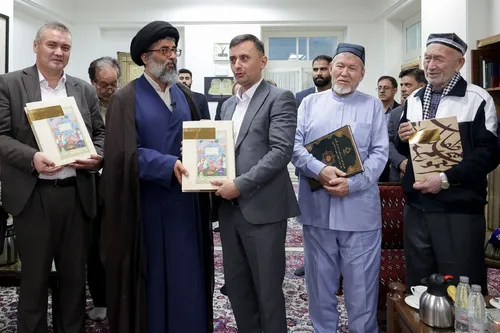
During their intensive trip to the three cities of Samarkand, Bukhara, and Tashkent, with the aim of reviving civilizational ties and connecting knowledge to industry, the dispatched delegation of this university signed 7 comprehensive cooperation memorandums with the most prestigious universities of Uzbekistan to implement their successful model of scientific diplomacy—seen in countries such as Iraq—this time in the heart of Central Asia.
Related News
Post comments
- Editor's suggestion
- Latest news
Proposal for Establishing a Joint Iran-Uzbekistan Technology Development Office Presented
**Signing of Memorandum of Understanding on Cooperation Between Office of Deputy Custodian for International Affairs of Astan Quds Razavi and the International Foundation for Razavi Art and Culture**
The 11th International Assembly of "Combatants in Exile"
Chief Justice at the Closing Ceremony of the "Combatants in Exile" Assembly: Confronting Arrogance is an Everlasting Duty
Intl. “Mujahideen in Exile” Summit opens focusing on anti-Imperialism, legacy of Martyred Leader
Iraqi, Iranian people allies, partners in defending Islam, sacred values
Zealous tribal sheikhs, leaders of Iraq, khuzestan meet with AQR custodian
Enemy seeks to break deep bond between nations of Iran, Iraq: AQR custodian
Iraqi tribal sheikhs visit Imam Reza shrine
Iraqi tribal sheikhs renew covenant with Martyred Leader in Razavi shrine
Razavi shrine servants welcome Iraqi tribal Sheikhs at Mashhad Airport 2
AQR allocates special budget for those hit by US-Israeli crime in Lamerd
Under protection of the Imam; A visual narrative of dispatch of families of Martyrs and Wounded people of Lamerd to Mashhad
AQR honors Iraqi tribal sheikhs active in funeral procession of the Martyred Leader
Razavi shrine servants welcome Iraqi tribal Sheikhs at Mashhad Airport
AQR, Sadr International Award explore ways to expand cooperation
Turkish Shia visitors praise spiritual atmosphere and services at Imam Reza Shrine
Sheikh Baha'i enclosure at Imam Reza Shrine reopened after renovation
Razavi Hospital named exemplary national exporter of health services
Black mourning banners installed at Imam Reza Shrine for martyrdom anniversary of Hazrat Fatima
Imam Reza Shrine holds mourning ceremonies to mark martyrdom anniversary of Hazrat Fatima
Campaigns