Islamic Revolution’s message transcends national borders
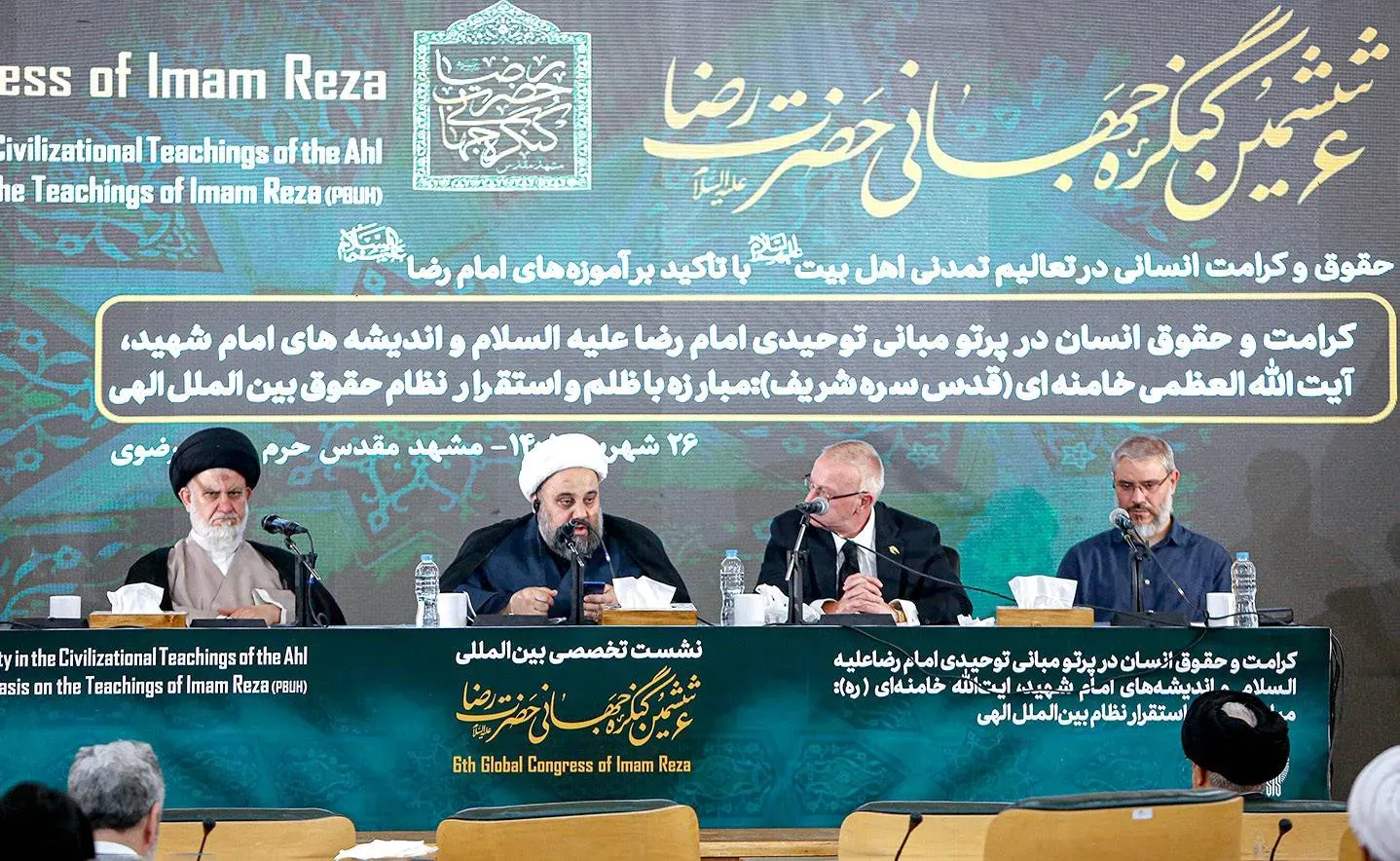
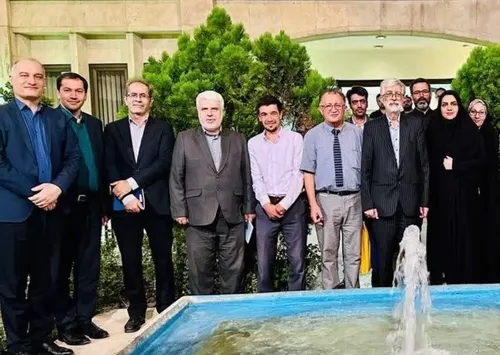
Emphasizing the deep connection between the fundamental teachings of Imam Reza (AS) and the governance model of the martyred Leader, Hoj. Mojtaba Elahi Khorasani, a professor at Al-Mustafa International University, said that the message of the Islamic Revolution has transcended national borders and evolved into a global discourse by drawing on the Razavi tradition.
Hoj. Elahi Khorasani explained the relationship between the “Razavi model” and the governance model of the martyred Leader of the Revolution, saying, “This congress, which began its work in the 1980s during the presidency of the martyred Leader, has always benefited from his guidance and consultations.”
Referring to the opening statement of the congress in the 1980s, he added, “The martyred Leader of the Revolution, with penetrating insight, described the life of Imam Reza (AS) as an ongoing struggle. This description became a practical embodiment throughout his own seven decades of struggle. Today, this struggle rooted in the Razavi tradition is manifested in the form of social responsibility and political activism against tyrannical rule by the martyred Leader of the Revolution.”
Explaining the epistemological dimensions of governance, the seminary professor stated, “The martyred Leader always emphasized that the teachings related to Imamate and governance models derived from the life of Imam Reza (AS) are unique. During his years of national leadership, he constantly reflected on these teachings and translated them into practice in the field of governance.”
Referring to the international challenges facing the Islamic Revolution, Hoj. Khorasani further stated, “Over the past four decades, colonialism has sought to obscure the global message of the Islamic Revolution and portray it as a religious revolution confined to Iran’s national borders. Today, however, we are witnessing the failure of this project.”
He continued, “The message of the Islamic Revolution, which is based on confronting oppression and supporting the oppressed around the world, has become a global discourse that has attracted the attention of various societies.”
Emphasizing the importance of bringing international scholars and intellectuals to Mashhad, the university professor stated, “Just as Imam Reza (AS) engaged in dialogue with leaders of different religions, the presence of thinkers and academics from around the world in Mashhad is a fundamental step toward globalizing this discourse.”
Hoj. Elahi Khorasani concluded, “We hope that this discourse does not remain merely at the level of emotion, but develops into knowledge grounded in global realities within academic circles. Our ultimate goal is for this movement to move beyond the boundaries of academic discourse toward a precise articulation of Islamic thought and its practical implementation in societies.”
Related News
Post comments
- Editor's suggestion
- Latest news
Islamic Revolution’s message transcends national borders
6th Imam Reza International Congress concludes
Intl. scholars explore Razavi justice, resistance against structures of domination
Researchers explore the Ahl al-Bayt’s (AS) distinctive perspectives on justice
Imam Reza Congress, vital platform for strengthening unity of Islamic Ummah
African thinker highlights inseparable link between Razavi teachings, governance model of Martyred Leader
Martyred Leader’s martyrdom resonates across religious boundaries in Latin America
Imam Reza Shrine remains a focal point of convergence for nations, religions
Human rights defined through Imam Reza’s teachings, human dignity: Scholar
Imam Reza’s teachings, “jihad of clarification” ensure invincibility of Resistance: Yemeni researcher
US researcher links Imam Reza’s foresight, Martyred Leader’s legacy to governance
International scholars examine human dignity and rights in light of Imam Reza’s teachings
Scholars examine formation of an independent and self-reliant resistance front against hegemonic powers
6th Imam Reza International Congress explores human rights, Razavi teachings
RUIS professor explains various dimensions of Abdul Azim Hassani’s lifestyle and teachings
Razavi shrine library, a treasury of Persian poets works
Imam Reza’s legal perspectives have gained global prominence
Global power redefined through Razavi teachings and reflected in a leadership model
IRIU, Ministry of Foreign Affairs forge scientific diplomacy ties
Future diplomats tour Imam Reza Shrine
Iraqi students visit Imam Reza Shrine
Campaigns