AQR Custodian urges elite youth to link science with divine gratitude
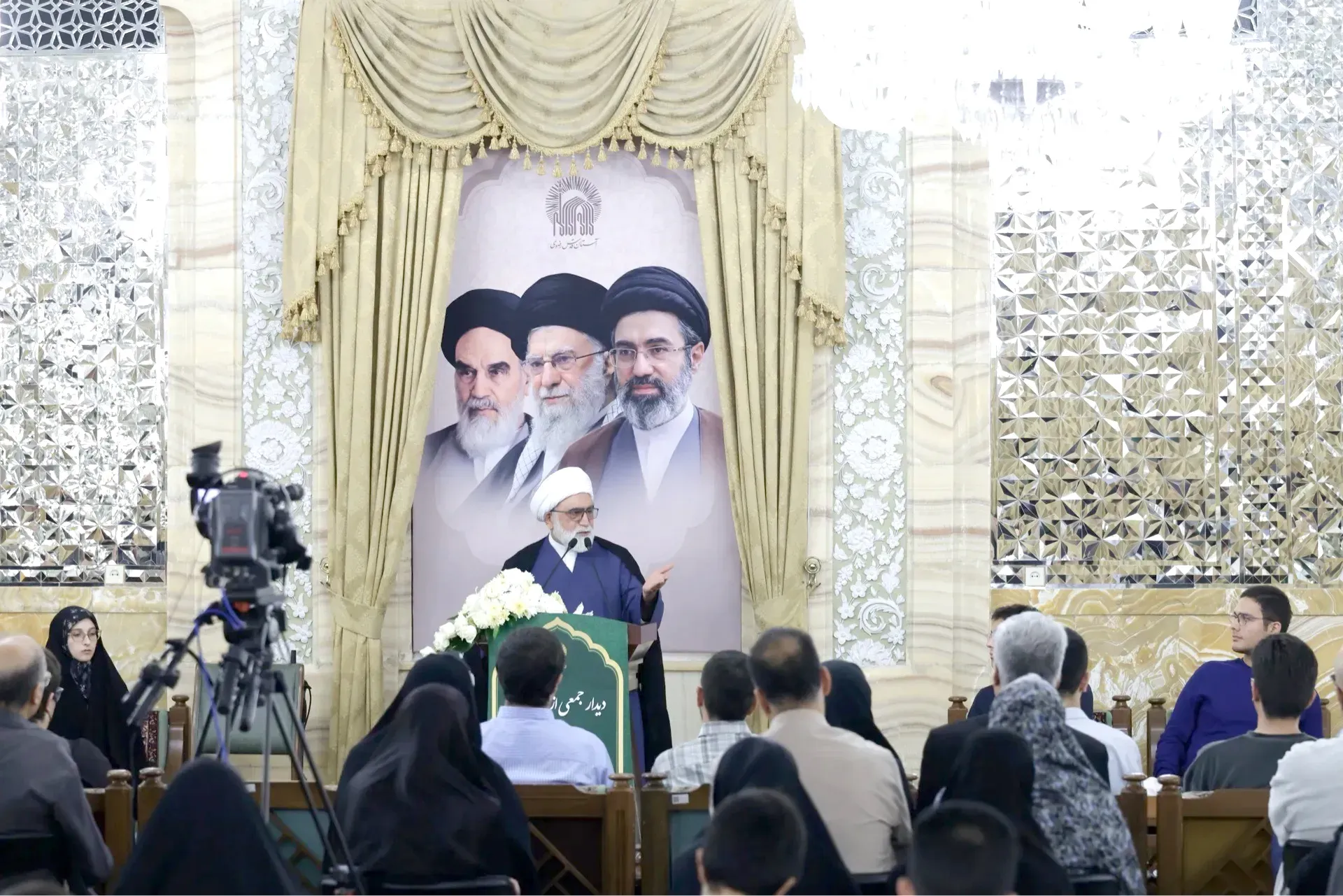
In a meeting with national university entrance exam top scorers and academic elites at Imam Reza Shrine in northeast Iran, the Custodian of Astan Qods Razavi (AQR) emphasized that today's scientific successes pave the way for conquering greater future peaks.
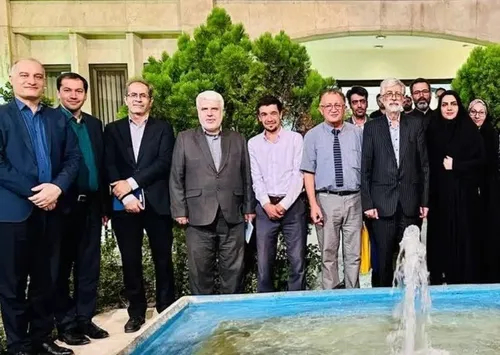
The meeting took place on October 21 at Velayat Hall of Imam Reza Shrine, bringing together top national exam scorers, academic elites, and science Olympiad medalists.
Ayat. Ahmad Marvi, the Custodian of Astan Qods Razavi (AQR), congratulated the students, their families, and teachers while stressing the divine origin of their talents and achievements.
He stated: "Human success stems from a combination of intelligence, individual effort, supportive parents, a suitable study environment, and dedicated teachers; therefore, recognize this great blessing from Almighty God and remain grateful."
The AQR Custodian added that many individuals aspire to achieve such success but lack proper talent, facilities, or supportive family environments.
He emphasized that gratitude toward divine grace paves the way for receiving greater blessings and attaining higher summits.
Transitioning to the spiritual significance of the holy mausoleum, Ayat. Marvi recalled the title "Scholar of the Family of Muhammad", which Imam Sadiq used when referring to Imam Reza.
He noted: “The millions of pilgrims visiting the shrine from diverse cities and countries represent a profound manifestation of Razavi dignity, offering renewed spiritual experiences to visitors during every journey”.
Also speaking in the event, Dr. Gholam-Ali Haddad-Adel, president of the Academy of Persian Language and Literature, addressed the gathering.
He emphasized the necessity of preserving and nurturing the country's human capital, noting that news of scientific and athletic victories brings immense joy and hope to the public during challenging times.
He likened the intellectual endeavors of Olympiad medalists to the efforts of national athletes.
Recalling the history of Iran's participation in international science Olympiads, Haddad-Adel shared how initial steps began approximately forty years ago in 1985 when he served as deputy minister of education.
He recounted sending Iran's first team to the international mathematics Olympiad in Havana, Cuba, where students secured a bronze medal despite having no prior experience.
Haddad-Adel urged authorities to support elites and protect human capital against brain drain, noting that Iran requires the scientific capabilities of its youth to solve domestic challenges.
He reminded the elites that public resources and national wealth contribute to their educational opportunities, reinforcing their responsibility toward the country.
Finally, he advised young scholars to blend scientific progress with ethics, religious devotion, and public service.
Related News

Post comments
- Editor's suggestion
- Latest news
Imam Reza Shrine holds mourning ceremonies to mark martyrdom anniversary of Hazrat Fatima
University of Qom hosts meeting to review preparations for specialized session of Imam Reza International Congress
Razavi manuscript treasury keeps Quran attributed to Imam Hussein (AS)
AQR Custodian urges elite youth to link science with divine gratitude
Top elite students, top national exam scorers honored at Imam Reza Shrine
Top exam scorers and science Olympiad medalists meet AQR Custodian
Top national exam stars, academic elites visited Imam Reza Shrine
Iran and Iraq form a united front against aggression, Iraqi organizer says
Ceremony honors Hussaini Mukibs at Imam Reza Shrine
Love for Ahl al-Bayt is an unbreakable bond between Iranian and Iraqi nations: Custodian
Imam Reza Shrine hosts ceremony honoring Iraqi Mukib operators
Iraqi Mukib operators voice brotherhood at Imam Reza Shrine
Festive atmosphere engulfs Imam Reza Shrine on Hazrat Zeinab’s birth anniversay
Imam Reza Shrine marks Hazrat Zeinab’s birth anniversary
Intl. architects unite to heal grief over Minab school martyrs
Requirements for Imam Reza International Congress assembly reviewed at Qom University
Engineering, maintenance, and restoration projects enhance pilgrim comfort at Imam Reza Shrine
Two Razavi servants from Markazi Province named among the world’s top 2% of scientists
Imam Reza Shrine’s English-speaking mourning group promotes the teachings of the Ahl al-Bayt (AS)
Tribes play key role in protecting national security, territorial integrity, economy: AQR Custodian
Deputy minister of cultural heritage, tourism and handicrafts visits AQR Central Library
Campaigns