Razavi manuscript treasury keeps Quran attributed to Imam Hussein (AS)
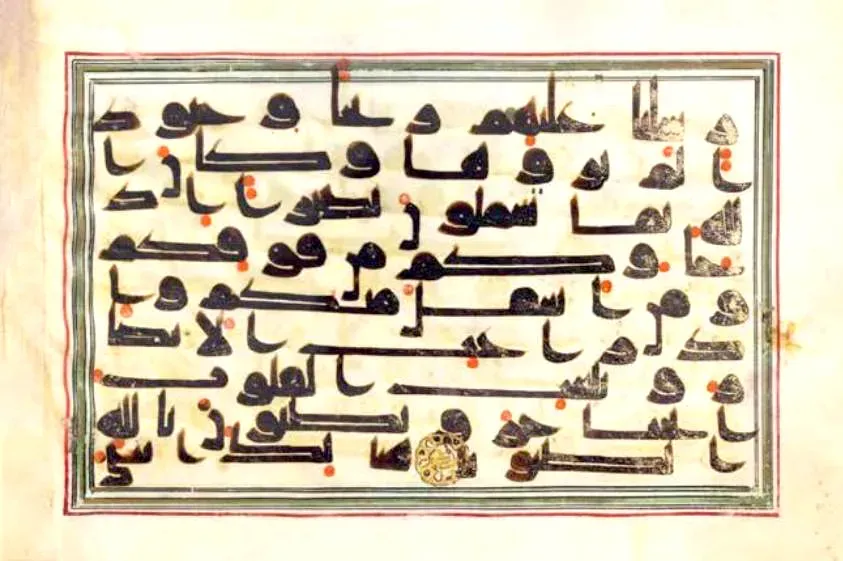
Ancient Quran attributed to the handwriting of Imam Hussein (AS), donated to the manuscript treasury of Imam Reza Shrine by Martyred Leader of the Islamic revolution, stands among notable works of the Quranic treasury of Astan Qods Razavi (AQR) due to its historical significance and artistic values.
In addition to introducing artistic and historical features, codicological studies of this great work reveal important points about method of attributing ancient Qurans to the Infallible Imams (AS).
Ramazanali Izanloo, director of manuscripts at Organization of Libraries, Museums, and Documents Center of AQR, said: “These copies, in addition to their spiritual and emotional values, are of great importance from historical, artistic, and codicological perspectives and can provide researchers with valuable information about tradition of Quranic transcription in the early centuries of Islam”.
Stating that history of calligraphy and book arts in Islamic culture is deeply linked to the tradition of Quranic writing, Izanloo expressed: “From the beginning of the Islamic era, Muslims employed best methods of transcription and related arts for writing Quran. Therefore, examining ancient copies of Quran plays an important role in understanding history of arts such as calligraphy, illumination, bookbinding, and book decoration”.
He added: “Number of remaining copies from early centuries of Islam is limited, and many of surviving works are available as single pages or incomplete fragments, therefore, relatively complete copies with suitable characteristics for scientific studies are of special importance to researchers”.
According to Izanloo, AQR library possesses a significant collection of Qurans from early centuries of Islam, part of which has been enriched through tradition of endowment”.
One of the copies in this collection is a Quran whose transcription is attributed to Imam Hussein (AS). Based on the codicological studies presented regarding this work, only 8 pages of the original version remain in the AQR library now. Also, there are 3 pages at the beginning and 2 blank pages at the end of the version, some of which contain notes. The basis for attributing this Quran to Imam Hussein (AS) is a phrase inscribed on the back of the final page of the version, which states: "Written by Hussein bin Ali".
Izanloo explained: “In historical sources, largest number of ancient Qurans are attributed to Imam Ali (AS), as he is mentioned in ancient sources as one of the scribes of Quran. Attribution of Quran to other Imams (AS) has also been raised in some later sources, including works from the Safavid period”. He added: “There have always been scientific discussions regarding authenticity of these attributions”.
According to the director of manuscripts of AQR, value of these copies is not limited to their attribution only, but their calligraphic features, transcription style, manuscript structure, and other historical signs also provide important information about Quranic transcription traditions in the early centuries of Islam”.
In collaboration with AQR Printing and Publishing Institute, AQR Organization of Libraries, Museums, and Documents Center has taken steps to prepare high-quality images and conduct scientific research on these copies in order to introduce exquisite works and provide access for researchers and those interested in Islamic written heritage.
Study and introduction of Quran attributed to the handwriting of Imam Hussein (AS) provides a basis for a more accurate understanding of codicological features of this work. Also, cooperation of manuscript experts and printing and publishing specialists allows for presentation of a more accurate image of this historical and cultural heritage.
Regardless of scientific disagreements regarding attribution of some of these works, ancient Qurans existing in AQR are considered part of valuable written heritage of the Islamic world.
Related News

Post comments
- Editor's suggestion
- Latest news
Imam Reza Shrine holds mourning ceremonies to mark martyrdom anniversary of Hazrat Fatima
University of Qom hosts meeting to review preparations for specialized session of Imam Reza International Congress
Razavi manuscript treasury keeps Quran attributed to Imam Hussein (AS)
AQR Custodian urges elite youth to link science with divine gratitude
Top elite students, top national exam scorers honored at Imam Reza Shrine
Top exam scorers and science Olympiad medalists meet AQR Custodian
Top national exam stars, academic elites visited Imam Reza Shrine
Iran and Iraq form a united front against aggression, Iraqi organizer says
Ceremony honors Hussaini Mukibs at Imam Reza Shrine
Love for Ahl al-Bayt is an unbreakable bond between Iranian and Iraqi nations: Custodian
Imam Reza Shrine hosts ceremony honoring Iraqi Mukib operators
Iraqi Mukib operators voice brotherhood at Imam Reza Shrine
Festive atmosphere engulfs Imam Reza Shrine on Hazrat Zeinab’s birth anniversay
Imam Reza Shrine marks Hazrat Zeinab’s birth anniversary
Intl. architects unite to heal grief over Minab school martyrs
Requirements for Imam Reza International Congress assembly reviewed at Qom University
Engineering, maintenance, and restoration projects enhance pilgrim comfort at Imam Reza Shrine
Two Razavi servants from Markazi Province named among the world’s top 2% of scientists
Imam Reza Shrine’s English-speaking mourning group promotes the teachings of the Ahl al-Bayt (AS)
Tribes play key role in protecting national security, territorial integrity, economy: AQR Custodian
Deputy minister of cultural heritage, tourism and handicrafts visits AQR Central Library
Campaigns