Malek treasure preserves legacy of Quranic calligraphers
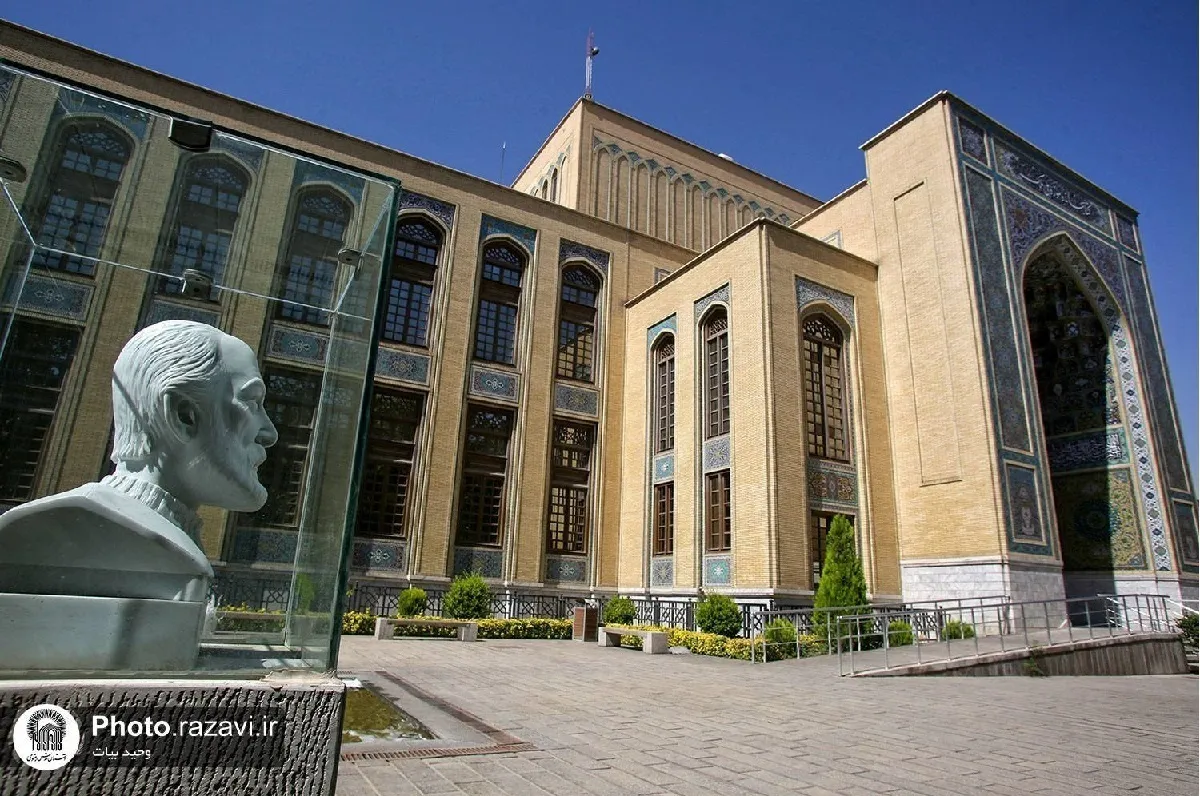
More than 80 rare handwritten Qurans are preserved at Malek National Library and Museum, cultural endowment of Astan Qods Razavi (AQR), showcasing centuries of Iranian artistry in sacred calligraphy.
A unique collection of handwritten Qurans has been preserved at Malek National Library and Museum in Tehran, thanks to the long-standing tradition of endowment and donation and the foresight of the late Haj Hossein Aqa Malek, founder and benefactor of the institution. This cultural treasure reflects the evolution of Quranic transcription in Iran and demonstrates artistic excellence in calligraphy, illumination, paper, and binding across centuries.
Among the most historically significant pieces are early Islamic Kufic parchment folios attributed to second Shia Imam Hassan Mojtaba, bearing a visitation note dated 984 AH (1576 CE).
Other rare works include fourth-century AH Kufic folios and a late fifth-century AH manuscript written in Kufic inclined toward Naskh script. These pieces highlight the historical depth of the collection and its importance in documenting early Quranic writing traditions.
The museum also houses first-rate artistic masterpieces. A Quran penned in Naskh by Yaqut al-Musta’simi in 680 AH (1281 CE) stands among the highlights.
Other distinguished works include manuscripts written by Alaeddin Tabrizi in 969 AH (1561 CE), Mohammad Ebrahim Qomi in 1094 AH (1683 CE), and several prominent calligraphers of the Safavid and Qajar eras, all executed in refined Naskh script. A notable volume features lacquer floral binding crafted in 1271 AH (1854 CE), demonstrating excellence in both calligraphy and decorative arts.
The collection displays Qurans of varying dimensions, from one of the largest manuscripts of the 13th century AH to an exceptionally small 7-by-4-centimeter copy dated 1209 AH (1794 CE). A remarkable 10th-century AH pocket-sized Quran written on Khanbaliq paper and fully gilded on lapis background further exemplifies technical mastery.
Malek National Library and Museum was endowed to Imam Reza Shrine in 1316 SH (1937 CE) and continues to serve as one of Iran’s six major manuscript repositories.
Related News


Post comments
- Editor's suggestion
- Latest news
Decline of Takfiri movements indicates success in promoting Islamic unity
IRIU contributes to international publication on quantum security
Prayer promotion starts with worshipers’ conduct: Custodian
IRIU announces publication of international book on quantum security
AQR publishes Quran pages attributed to handwriting of Imam Hossein (AS)
Introductory “In’ash al-Aql” course concludes with head of AQR Quranic Center in attendance
AQR Custodian Offers Condolences on Passing of Grand Ayatollah Shobeiri Zanjani
Evaluation shows Imam Reza Intl. University has capacity to enroll more international students
Transparency in fulfilling donors’ intentions boosts public donations to AQR
Flag-changing ceremony held at Hazrat Masumeh Shrine
Nation’s most modern student dormitory inaugurated in presence of AQR Custodian
Inscriptions honoring Imam Hassan Askari birth anniv. installed at Imam Reza Shrine
Islamic Revolution’s message transcends national borders
6th Imam Reza International Congress concludes
Intl. scholars explore Razavi justice, resistance against structures of domination
Researchers explore the Ahl al-Bayt’s (AS) distinctive perspectives on justice
Imam Reza Congress, vital platform for strengthening unity of Islamic Ummah
African thinker highlights inseparable link between Razavi teachings, governance model of Martyred Leader
Martyred Leader’s martyrdom resonates across religious boundaries in Latin America
Imam Reza Shrine remains a focal point of convergence for nations, religions
Human rights defined through Imam Reza’s teachings, human dignity: Scholar
Campaigns