AQR custodian stresses unity, asserts national gatherings model for world
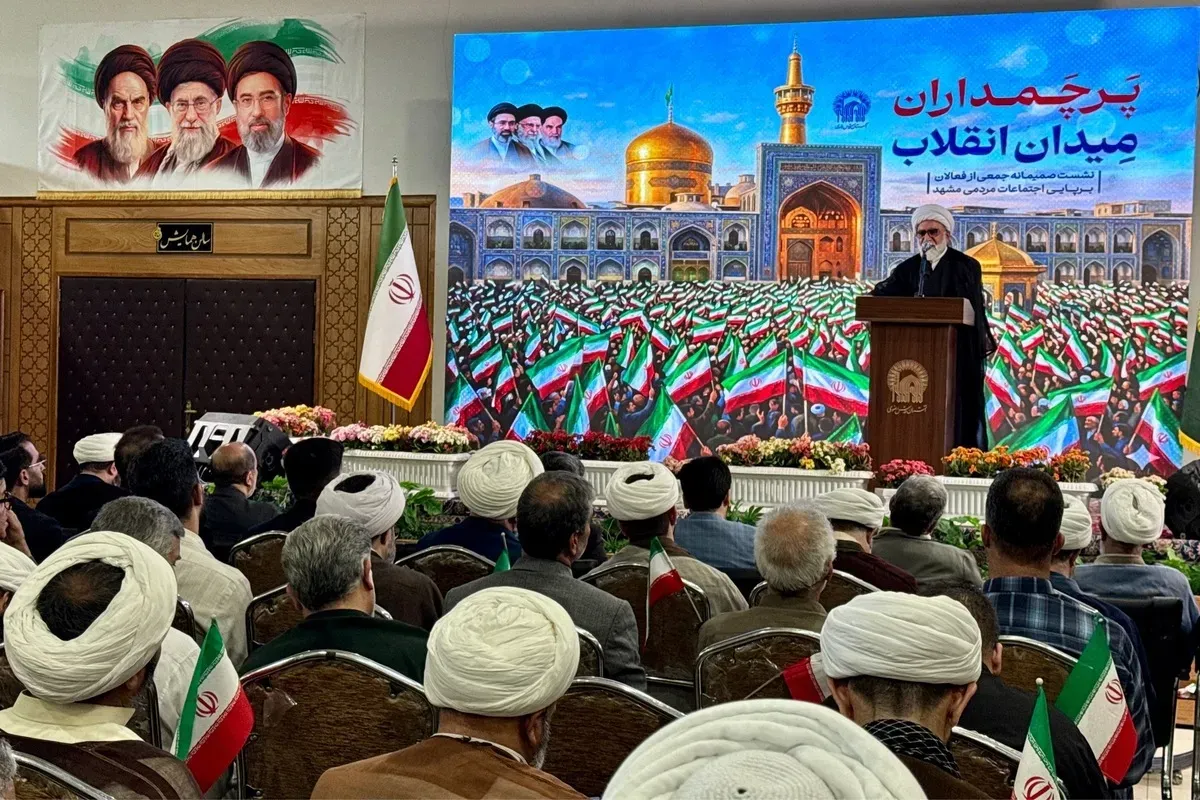
The Custodian of Astan Qods Razavi (AQR) emphasized that safeguarding national unity is the central mission today, noting that the steadfastness of the Iranian people in the face of external pressure has become an inspiring model for freedom‑seeking nations.
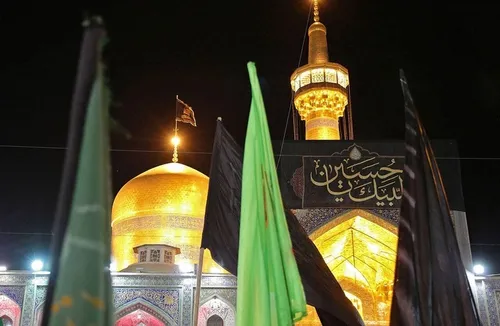
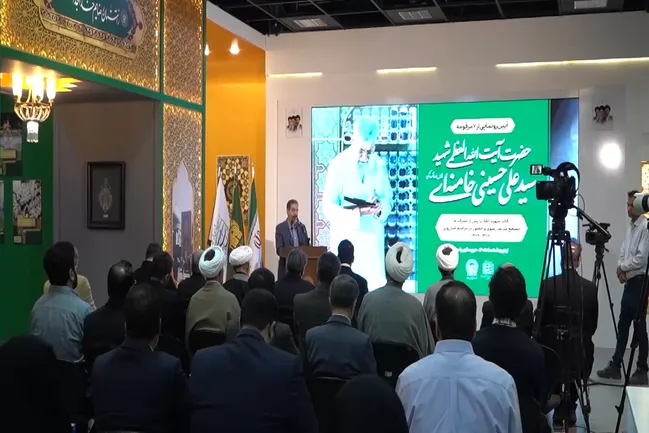
Ayat. Marvi, addressing a ceremony at Imam Reza Shrine, in the northeastern Iranian city of Mashhad, paid tribute to community‑based mobilization efforts, reflecting on Quranic verses from Surah al‑Hashr.
Outlining the declining hegemony of the United States and the role of Iranian nation in countering external threats, he referenced the verse “They will not fight you all except from fortified villages or from behind walls ...” stating that “The verse has materialized before our eyes. Enemy fleets have distanced themselves hundreds of kilometers from Iranian waters, and even within the United States there is no unified voice.”
The Custodian of Astan Qods Razavi pointed to shifting European positions toward the United States and explained: “The Western alliance formed after World War II has fractured. European politicians now openly say a new global order is emerging and U.S. hegemony has collapsed.”
He went on to say: “Europeans previously lacked the courage to speak to Washington in this manner, yet today openly discuss the need to build new military capabilities because America is no longer reliable”.
Ayat. Marvi attributed these developments to the Islamic Revolution, the leadership of the martyred Leader Ayat. Seyyed Ali Khamenei, and public steadfastness.
“The criteria of victory in warfare is not measured by damage but by achieving objectives. The United States sought to dismantle and fragment Iran, but not only did it fail to approach these aims, it could not even activate its own separatist groups for a minor operation”, he explained.
The top official asserted that international political actors now acknowledge Iran as the victorious side, highlighting the U.S. president’s shift from an initially triumphant tone to calling on the world for assistance in opening the Strait of Hormuz. “The mantle of superpower status was torn from the United States not by an equal rival but by a nation whose military budget is incomparable to America’s trillion‑dollar expenditure.”
Ayat. Marvi described the mass public presence during recent events as “a divine support”, asserting: “The people demonstrated greater insight than many politicians, and their presence became a model for the oppressed and the free‑spirited worldwide—people who stood against America with nothing but their flags.”
He stressed the necessity of preserving national unity under sensitive conditions and maintained that Iran remains in a wartime environment where solidarity is essential.
AQR’s head warned against disputes, citing the verse “Do not quarrel, lest you lose courage and your strength depart,” explaining that internal discord weakens society and emboldens adversaries.
He noted that following the martyrdom of the Leader, diverse social groups—ranging from veiled and unveiled women to some former critics—joined national defense efforts, and he underlined the importance of safeguarding this achievement.
Ayat. Marvi added: “If unveiled women attend gatherings, hold the Iranian flag, and chant slogans against America and Israel, this alone dismays figures like Netanyahu and Trump. They must be welcomed, because the enemy should understand that Iranians of all appearances support their nation.”
He further quoted the martyred Leader’s remarks regarding those who remove their hijab, noting: “He explained that many of them do not know who stands behind such agendas; if they knew, they would not act in that way. Many are believers and observant. This matter will ultimately be resolved.”
Ayat. Marvi emphasized a broad‑minded approach, citing the conduct of Imam Ali, who advised even those who had seized political authority.
He called for trust in national officials during wartime conditions, stating that all officials work under the guidance of the Leader. “The president has repeatedly reaffirmed his loyalty to the new Leader just as he had toward the martyred Leader”.
Regarding negotiations, the top official maintained: “We neither instruct you to negotiate nor to avoid negotiation. We neither call for war nor for peace. We follow the Guardian Jurist. We trust the negotiating team and expect them to speak from a position of dignity, strength, and honor.”
Citing Imam Ali’s words, he stated: “War reveals what is hidden,” insisting that decisions cannot be taken without the Leader’s permission.
He referenced the Speaker of Parliament’s participation in talks in Pakistan, which he said occurred under the Leader’s directive despite facing criticism, and urged the public to be mindful of accountability for their judgments.
Ayat. Marvi stressed that the Leader is in full health and fully informed of national affairs through secure mechanisms, leaving no cause for concern.
Turning to economic matters, he described: “Economic pressure is a continuation of military confrontation; however, attempts at maritime encirclement of Iran had already been broken”.
Ayat. Marvi warned that the adversary is banking on economic weakening and appealed to the business community, saying that merchants—traditionally supporters of Shia Islam, the clergy, and guardianship—must not allow opportunists to advance hostile economic agendas. “You must confront such individuals within your own ranks”.
In closing, Ayat. Marvi underscored the need for frugality in wartime conditions and encouraged assisting those unemployed or facing hardship so that the nation may overcome current challenges with dignity.
Related News


Post comments
- Editor's suggestion
- Latest news
IRIU, Ministry of Foreign Affairs forge scientific diplomacy ties
Future diplomats tour Imam Reza Shrine
Iraqi students visit Imam Reza Shrine
Razavi University, al-Mustafa International University launch joint cooperation center
Malek Museum unveils exhibition on devotion to Prophet Muhammad
Khorasan Razavi MPs support AQR development plans for Imam Reza Shrine
AQR research deputies strengthen international synergy
Darvazeh Bathhouse reflects Safavid-era history in Mashhad: Expert
Sunni influencer recalls shattered stereotypes during visit to Imam Reza Shrine
International Islamic Unity Conference continues strategic vision of Iran’s leaders
Iran is a unique model of peaceful coexistence: Muslim activist
Imam Reza Shrine plays pivotal role in Islamic unity: Bahraini scholar
40th Islamic Unity Conference concludes in Mashhad
40th Islamic Unity Conference concludes in Mashhad
Imam Reza Shrine adorned for birth anniv. of Prophet, Imam Sadiq
Arab pilgrims honor birth anniv. of Prophet, Imam Sadiq
Afghan collector donates rare stamps to AQR
Imam Reza Intl. University, Razavi University expand international cooperation
AQR Custodian meets martyr Larijani's family members
Intl. landscape design and memorial space competition for Shajareh Tayyebeh School martyrs' cemetery
Dust-cleaning ceremony held at Imam Reza Shrine
Campaigns