Researchers explore the Ahl al-Bayt’s (AS) distinctive perspectives on justice
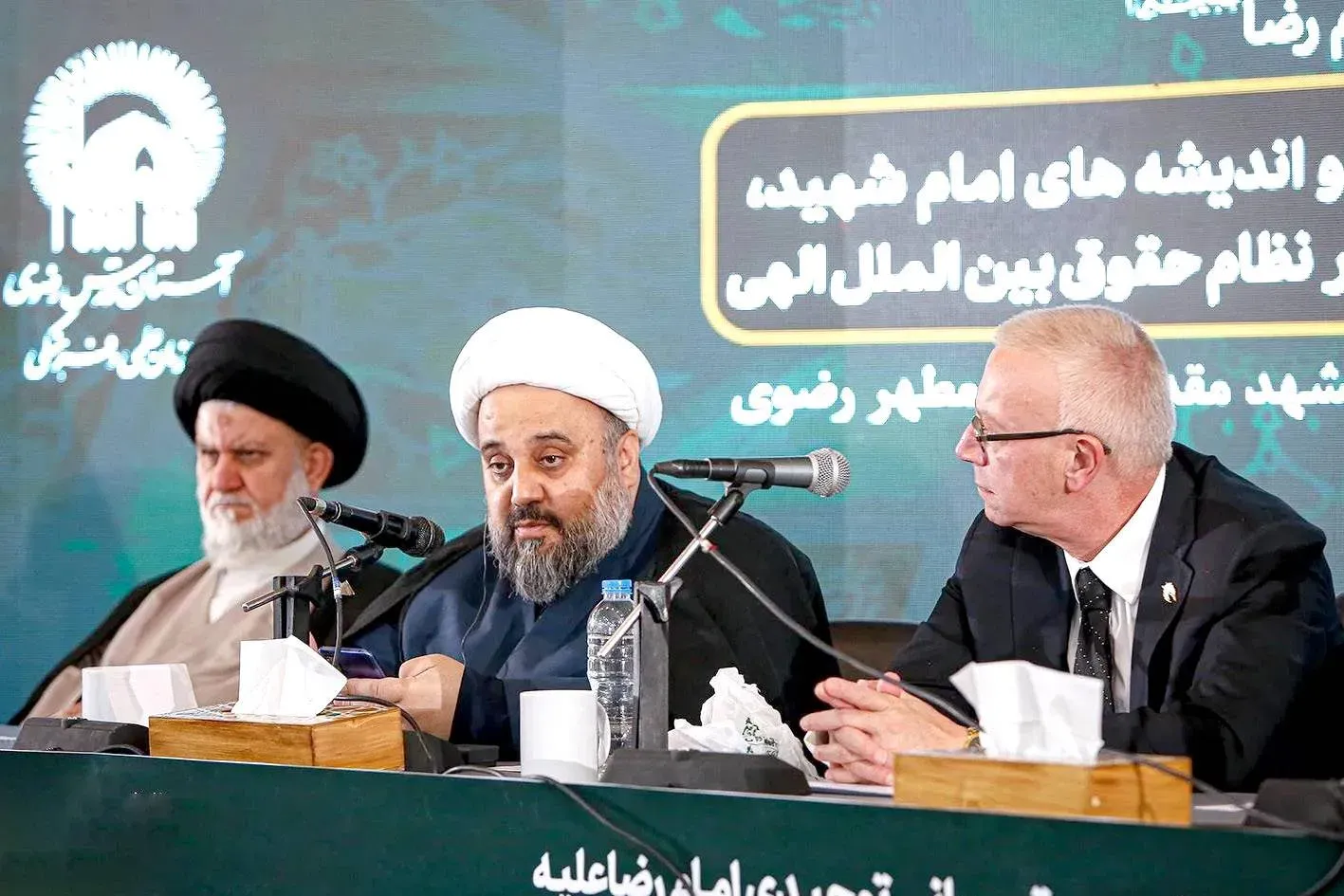
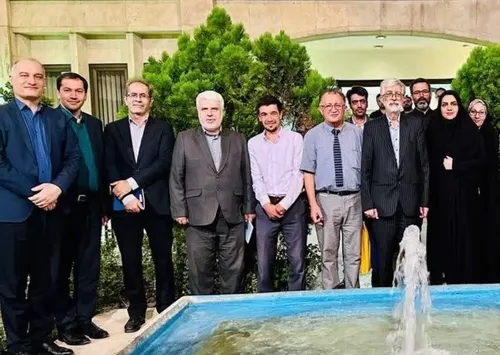
Focusing on justice and human dignity, global scholars and researchers explored the distinctive perspectives of the Ahl al-Bayt (AS) on these two principles at a specialized session titled “New Islamic Civilization and Iran’s Role as the World’s Fourth Power from the Perspective of the Martyred Leader (RA).”
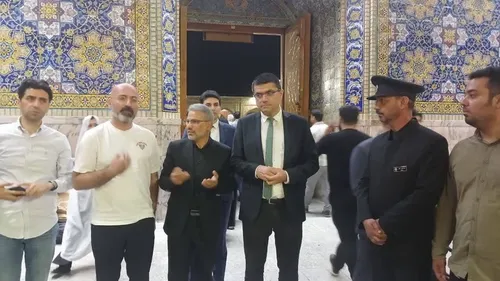
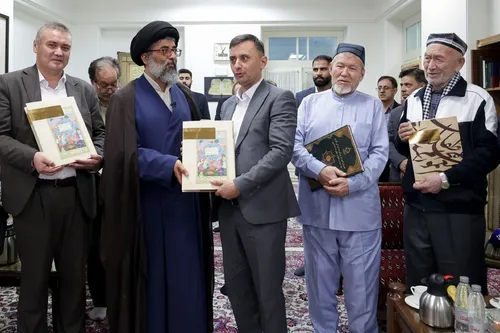
The international specialized session was attended by guests from Iraq, the Vatican, and France.
Ayatollah Fazel al-Musawi al-Jaberi, an Iraqi scholar and professor of advanced seminary studies in Najaf, noted that the foundation of the Islamic worldview is monotheism, saying, “Monotheism in the school of the Eighth Imam (AS) is not merely a theological concept, but a comprehensive worldview.”
He emphasized that God sent 124,000 prophets to humanity to present the foundations of monotheism, stating, “God is One and has no partner. Therefore, we Muslims are commanded to carry out all our actions for God.”
Ayatollah al-Musawi al-Jaberi continued, “Imam Khomeini (RA) and the martyred Leader drew on the principle of monotheism in leading the Islamic Revolution to victory.”
Gian Pietro Caliari, a Vatican scholar and executive director of New Generation Education and the Pontifical Research Foundation Feduorazio in the Vatican, noted that many military operations and wars had been conducted by the United States under the pretext of regime change and in the name of defending human rights.
He said, “Examples of this can be seen in wars and military interventions in countries such as Afghanistan, Iraq, and Libya, which were carried out under the pretext of protecting their people.”
Caliari added, “These wars have consistently resulted in the destruction and destabilization of these countries and have failed to provide any genuine basis for defending human rights.”
Noting that such operations had their roots in Western countries in the 17th and 18th centuries, he stated, “All these wars reject the philosophical and metaphysical foundations of human rights.”
The executive director of New Generation Education at the Pontifical Research Foundation Feduorazio added, “History has shown that human rights have been reduced to an abstract concept and that their definitive meaning has, in practice, drifted beyond the scope of attention.”
He said that human rights had lost much of their meaning and that global arrogance had undermined the original meaning of human life, stating, “Under current conditions, if human rights are to become more effective, regardless of whether we promote their principles or not, they remain a comprehensive legal concept.”
Caliari continued, “Justice is instinctively rooted in human existence, whereas politics extends far beyond human instinct.”
He also said, “All human beings were created by God. Imam Reza (AS), as a figure who established peace, has made this clear to us: societies must be supported through justice and accountability. Therefore, we need to change.”
Caliari further stated, “We can now change our priorities. In this way, all demands can be addressed, but we must recognize that social and political crises around the world are destroying human lives and traditions.”
Referring to the need to establish peace and rationality in society amid these changes, he added, “The martyred Leader of Iran emphasized the importance of humanity to the fullest extent; therefore, this issue increases our responsibility.”
Continuing the session, Hoj. Mojtaba Elahi Khorasani, a professor of advanced jurisprudence and principles at Khorasan Seminary and a faculty member of the Akhund Khorasani Specialized Center, emphasized that power and justice are interconnected, saying, “These two components cannot have their necessary impact without one another.”
Hoj. Elahi Khorasani added, “Human dignity in the Razavi model of power is not merely about treating people well and respecting them; rather, it is a normative anthropological principle that determines both the purpose of power and its limits.”
He stated, “Justice is not a moral attachment that follows the establishment of power; rather, it defines the limits and ultimate purpose of power.”
The Khorasan Seminary faculty member explained, “From Imam Reza’s perspective, participation in a power structure does not necessarily mean accepting all of its logic. Rather, it is through the implementation of justice that power can find its true meaning.”
Hoj. Elahi Khorasani noted, “Preserving human dignity, human rights, and justice are three fundamental pillars in the vision of a country. Furthermore, national authority is part of a combination of human dignity, justice, security, and popular participation that forms the basis and foundation of this vision.”
Related News

Post comments
- Editor's suggestion
- Latest news
Islamic Revolution’s message transcends national borders
6th Imam Reza International Congress concludes
Intl. scholars explore Razavi justice, resistance against structures of domination
Researchers explore the Ahl al-Bayt’s (AS) distinctive perspectives on justice
Imam Reza Congress, vital platform for strengthening unity of Islamic Ummah
African thinker highlights inseparable link between Razavi teachings, governance model of Martyred Leader
Martyred Leader’s martyrdom resonates across religious boundaries in Latin America
Imam Reza Shrine remains a focal point of convergence for nations, religions
Human rights defined through Imam Reza’s teachings, human dignity: Scholar
Imam Reza’s teachings, “jihad of clarification” ensure invincibility of Resistance: Yemeni researcher
US researcher links Imam Reza’s foresight, Martyred Leader’s legacy to governance
International scholars examine human dignity and rights in light of Imam Reza’s teachings
Scholars examine formation of an independent and self-reliant resistance front against hegemonic powers
6th Imam Reza International Congress explores human rights, Razavi teachings
RUIS professor explains various dimensions of Abdul Azim Hassani’s lifestyle and teachings
Razavi shrine library, a treasury of Persian poets works
Imam Reza’s legal perspectives have gained global prominence
Global power redefined through Razavi teachings and reflected in a leadership model
IRIU, Ministry of Foreign Affairs forge scientific diplomacy ties
Future diplomats tour Imam Reza Shrine
Iraqi students visit Imam Reza Shrine
Campaigns