Scholars Call for Presenting Ayatollah Khamenei's Intellectual Foundations in a Philosophical Framework for Global Audiences
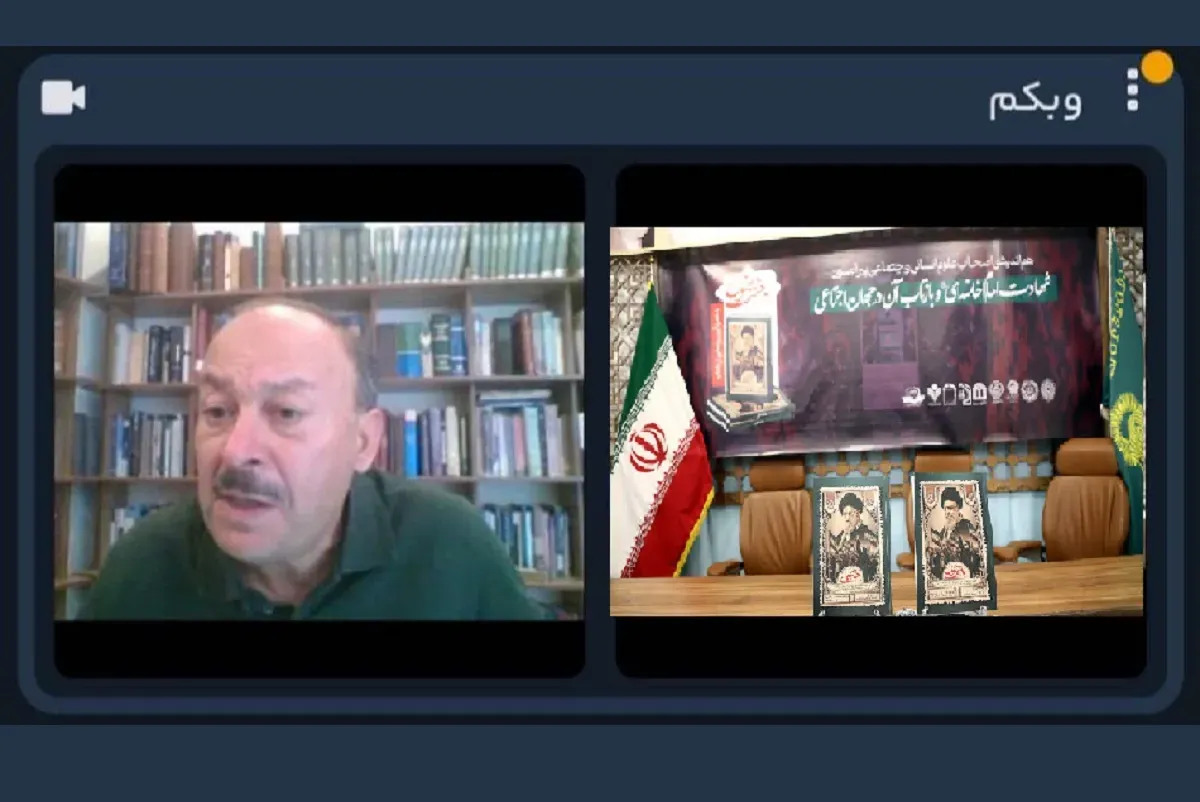
Scholars at a symposium on the martyrdom of the Martyred Leader of the Islamic Revolution emphasized the need to present the intellectual foundations of Ayatollah Seyyed Ali Khamenei in a philosophical framework and a language accessible to a global audience.
Participating intellectuals called for presenting Martyred Leader’s intellectual foundations in a globally accessible philosophical language that can connect with contemporary audiences and advance New Islamic Civilization project against historical and intellectual challenges. The scientific gathering discussed the issue within a symposium called "Martyrdom of Imam Khamenei and its Reflection in the Social World".
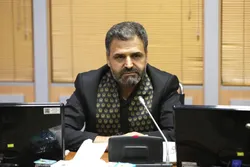
Addressing the symposium as a keynote speaker, Bijan Abdolkarimi, titled his speech as "Our Future and Martyred Leader; a Message to the Revolution’s Followers" and noted: “The most important question today is what dangers threaten intellectual, social, and political project of the Martyred Leader of the Islamic Revolution and what duties those loyal to this discourse have toward it”.
Abdolkarimi considered intellectual project of Ayatollah Seyyed Ali Khamenei as revival of Islam in contemporary world, transformation in Shia political jurisprudence, linking religious legitimacy with public participation, and providing a fresh reading of Islamic history.
“Preserving and stabilizing Islamic Republic, moving from Islamic Revolution to a system, government, society, and New Islamic Civilization, strengthening religious and revolutionary identity, supporting family, social justice, culture of sacrifice and resistance, and finally confronting foreign domination were among pillars of his political and social project,” he argued.
Emphasizing that relying on Islam can create a bond between Muslim nations, Abdolkarimi stated: “A purely theological language is not sufficient for communicating with all contemporary humans and religious concepts must be translated into a global language so that non-Muslim individuals inside and outside Iran can also connect with it”.
He went on to say: “Concepts such as confronting meaninglessness, commodification of life, reduction of humans to consumers, and dominance of technological rationality have capacity to take discourse of the Revolution beyond political and ideological conflicts and provide ground for dialogue with world thinkers”.
This intellectual stated: “Seminaries and universities must provide possibility for a serious dialogue between Islamic philosophy and contemporary Western thought and unlock the potential of Islam's intellectual heritage; because without such a transformation, the discourse of the Revolution cannot become a global discourse”.
Referring to historical weakness of political philosophy in the Islamic world, Abdolkarimi said: “Our society needs a deeper reflection on the relationship between religious legitimacy, the people's vote, new rationality, and possibility of realizing religious government in the contemporary world”.
He added: “Obstacles facing religious society are not only political, economic, military, and media-related, but historical, epistemological, and philosophical obstacles must also be taken seriously. Realizing religious matter in a world where secularism has become a pervasive phenomenon requires extensive rethinking”.
The thinker emphasized: "Posing these questions does not weaken the discourse of the Revolution; rather, it is essential to preserving and strengthening it. The followers of the Islamic Revolution must avoid oversimplification regarding the realization of a religious society and government”.
In another part of his speech, Abdolkarimi said: “Speaking of New Islamic Civilization directs society toward distant horizons and a different future, but civilization-building should not be seen merely as the result of political will”.
He reiterated: “Formation of the New Islamic Civilization requires a new epistemological system and a fundamental transformation in science of Principles and the Greater Jurisprudence (Fiqh al-Akbar); a transformation that can clarify relationship of religion with new sciences, human experiences, and contemporary world issues”.
Abdolkarimi further added: “If the discourse of the Revolution intends to offer an alternative model against Westernization, meaninglessness, and the dominance of technology, it must be careful not to get caught in the logic of power and tools of the same world it seeks to criticize”.
Concluding his remarks, Abdolkarimi stated: “Ayatollah Seyyed Ali Khamenei was not merely head of a government or a political leader alongside other leaders, but a historical figure who played a decisive role in the country's direction during one of the most sensitive periods of Iranian history”.
He emphasized: “The Martyred Leader of the Islamic Revolution did not allow Iranian society to be assimilated into Western global order and interpreted politics within a civilizational horizon, by emphasizing Iran's independence, historical, and cultural identity”.
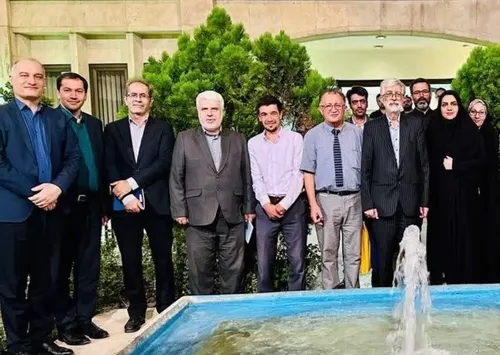
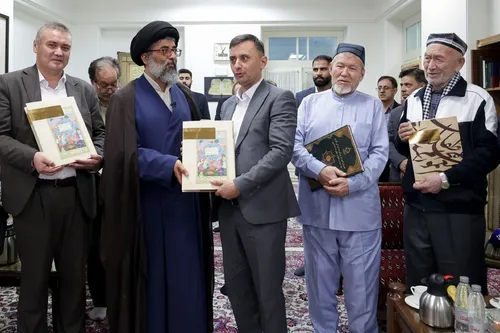
It is worth noting that the symposium of humanities and social science scholars regarding martyrdom of the Martyred Leader of the Islamic Revolution and its reflection in social world, along with unveiling ceremony of the book "Be'that-e Khoon", was held at Sheikh Tousi Hall in Qom by effort of Astan Quds Razavi’s Scientific and Cultural Organization Qom Office and with participation of Razavi University of Islamic Sciences and Imam Sadiq University.
Related News

Post comments
- Editor's suggestion
- Latest news
Ambassadors of Imam Reza set out on pilgrimage to Samarra holy shrine
Arbaeen Hosseini Mourning Ceremony at the Imam Khomeini Hall of the Holy Razavi Shrine
AQR's Custodian visits Imam Hussein underground portico project
Arbaeen is greatest display of solidarity among Islamic Ummah: AQR custodian
Razavi Hospital upgrades nuclear medicine, introduces new radiopharmaceuticals
Imam Reza Shrine unveils historic Arbaeen documents and manuscripts
Imam Reza Shrine hosts Arbaeen mourning programs for non-Iranian pilgrims
Love for Imam Hossein Brings Ivory Coast Devotees to Imam Reza Mukib
Serving Arbaeen pilgrims is an extension of Razavi culture
Aerial Images of the Area Between the Two Shrines on the Night of Arbaeen Hosseini
The Holy Razavi Shrine on the Eve of Arbaeen Hosseini
Mourning Ceremonies on the Eve of Arbaeen in the Holy City of Karbala
Iraqi amb. meets AQR's Custodian
The Central Kitchen of Astan Quds Razavi at the Mehran Border
Imam Reza (AS) Procession Stand at the Chazabeh Border
Presence of the Ambassadors of Imam al-Raouf (AS) Caravan in Kut
Scholars Call for Presenting Ayatollah Khamenei's Intellectual Foundations in a Philosophical Framework for Global Audiences
The Servants of the Holy Shrine of Imam Reza (AS) Pay Tribute at the Martyrs of Resistance Memorial in Baghdad
Lebanese women, resistance mourners assemble at Imam Reza Shrine
Khatoon Camp Garden hosts 600 international pilgrims of Martyred Leader’s funeral procession
Historical Qajar-era tilework restored at Quraish Courtyard of Kadhimiya Shrine
Campaigns