Unconditional obedience to leadership defines acceptance of Islamic Guardianship: Custodian

Custodian of Astan Qods Razavi (AQR) says true acceptance of Islamic Guardianship (Velayat Faqih) means following the leadership without conditions and maintaining unity during national challenges.
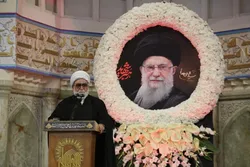
Speaking on the sidelines of his advanced jurisprudence class held at Imam Reza Shrine, Ayat. Ahmad Marvi, the Custodian of Astan Qods Razavi, expressed condolences over the martyrdom of late Leader of Islamic revolution and current Leader of the Islamic Revolution.
He described the incident as a major blow, but emphasized: “The enemies, despite malicious actions and plots, failed to achieve any of their intended objectives”.
Referring to the damage inflicted, including martyrdom of late Leader of Islamic Revolution and several senior commanders, he stated: “Despite magnitude of this tragedy, the enemy could not accomplish its goals”.
He attributed this outcome to divine grace, blessings of Imam Mahdi (the 12th Imam in Shia Islam), bravery of armed forces, and insightful presence of people on national stage.
The Custodian of Astan Qods Razavi explained: “In evaluating wartime developments, victory or defeat should not be measured by scale of losses but rather by achievement or failure of objectives. Enemy had expected that martyrdom of the Leader and several commanders would plunge Islamic society into despair, division, and confusion. However, these calculations proved completely wrong”.
The top official also praised courage and rapid response of military forces, saying: “Defensive and deterrent operations began only one and a half hours after enemy’s aggressive attack, demonstrating preparedness, discipline, and high morale among national forces and ultimately frustrating enemy plans”.
He described enemy attacks on universities, residential areas, schools, bridges, and national infrastructure as signs of confusion and miscalculation. “Such actions not only fail to achieve intended results but also reveal weakness in enemy analysis and growing desperation”.
Ayat. Marvi emphasized that the martyred Leader had established strong and resilient structures in political, military, and executive institutions of the country. “Because of these foundations Leader’s martyrdom caused minimal disruption in management of national affairs. This resilience is a clear example of strength of guardianship of the Islamic jurist.
In another part of his remarks, Ayat. Marvi highlighted historical role played by Assembly of Experts after martyrdom of the Leader Ayatollah Seyyed Ali Khamenei. “Members of the assembly demonstrated courage and determination by carefully studying situation and ultimately selecting most suitable successor despite threats from hostile forces”.
Responding to claims suggesting hereditary nature of political system, he stressed: “Hereditary succession implies appointing successor before death of leader. In this case, no one had prior knowledge and no recommendation or decision had been made by martyred Leader regarding his successor. Selection process took place through consultation, deliberation, and majority vote of representatives of the nation, demonstrating independence and fairness of decision”.
Referring to continued presence of people in streets, the head of AQR described public participation as manifestation of divine support. “Perseverance of people reflects Quranic promise: ‘If you support God, He will support you and make your steps firm’. Steadfastness of people strengthens society and represents real manifestation of divine assistance”.
He also referred to recent incident involving crash of American aircraft and helicopters, describing it as reminder of failed Operation Tabas in 1980. “Such events demonstrate weakness and inability of enemy and reveal failure of its threats while highlighting signs of divine support”.
Ayat. Marvi further noted: “In regional arenas, Islamic Republic of Iran continues to act effectively by relying on divine assistance and readiness of its forces. Iran depends on determination of its people and responds firmly to any threat”.
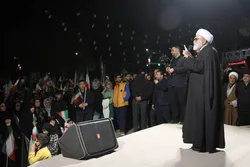
Emphasizing importance of public participation in defending country, the Custodian of Astan Qods Razavi stated: “Streets and public squares today serve as defensive trenches. Every individual, together with family members, should be present in these arenas because such participation represents both religious and national duty”.
He stressed practical impact of public presence, stating that influence of people in streets is even greater than missiles. “Enemy becomes frustrated by such unity and determination. Missiles are tools, but real strength of Islamic system of government lies in steadfastness and participation of people, which instills fear in the hearts of enemies”.
Ayat. Marvi warned against divisive analysis and public statements that could create doubt among people during wartime conditions. “Any proposals, views, or suggestions should be conveyed directly to responsible officials rather than publicly expressed in ways that may weaken unity and confidence among population”.
Regarding negotiations with enemy, he explained: “Dialogue only becomes meaningful when adversary no longer dares to attack and full strength of country has been demonstrated. Negotiations before such conditions are achieved merely cast shadow of war over nation and hinder economic, cultural, and scientific progress, which ultimately serves enemy objectives”.
He emphasized that the country already has Leader and Guardian Jurist, and no individual or group should attempt to dictate decisions to leadership. “Creating doubt among people constitutes betrayal, and interfering in determining timing or direction of leadership decisions is inappropriate. Duty of society is to follow leadership and remain united”.
Ayat. Marvi stressed that acceptance of Islamic Guardianship means unconditional obedience to leadership. “Any guidance or decision made by leadership should be implemented without delay or conditions, and no one has right to make statements that create uncertainty among people”.
He added: “Ordinary individuals do not have access to all information and assessments available to leadership. Therefore, people should avoid premature judgments or actions that could restrict decision‑making process of leadership. Complete and unconditional obedience remains essential responsibility”.
The Custodian of Astan Qods Razavi also stated that acceptance of Islamic Guardianship does not mean alignment with personal interests or individual slogans. Rather, it requires full and unconditional obedience in all circumstances, whether in public presence in streets or in other national matters. Such culture should be firmly institutionalized in society”.
He further warned that obedience to leadership should not weaken with change of leader or loss of previous leader. “Regardless of who holds leadership position at any time, society must maintain loyalty and cooperation, because negligence in this regard could harm nation”.
In concluding remarks, Ayat. Marvi emphasized importance of seeking intercession from Imams. He urged people not to neglect supplication and calls for assistance from Ahl al‑Bayt. “Believers have divine guardianship and support, and many successes have been achieved through such spiritual connections”.
He stated that primary spiritual capital of society lies in these acts of supplication and intercession. “Religious gatherings and mosques should encourage people to seek help from Imam Mahdi and to turn toward Imam Reza. Such supplications have always been answered and will continue to be answered”.
Related News


Post comments
- Editor's suggestion
- Latest news
IRIU, Ministry of Foreign Affairs forge scientific diplomacy ties
Future diplomats tour Imam Reza Shrine
Iraqi students visit Imam Reza Shrine
Razavi University, al-Mustafa International University launch joint cooperation center
Malek Museum unveils exhibition on devotion to Prophet Muhammad
Khorasan Razavi MPs support AQR development plans for Imam Reza Shrine
AQR research deputies strengthen international synergy
Darvazeh Bathhouse reflects Safavid-era history in Mashhad: Expert
Sunni influencer recalls shattered stereotypes during visit to Imam Reza Shrine
International Islamic Unity Conference continues strategic vision of Iran’s leaders
Iran is a unique model of peaceful coexistence: Muslim activist
Imam Reza Shrine plays pivotal role in Islamic unity: Bahraini scholar
40th Islamic Unity Conference concludes in Mashhad
40th Islamic Unity Conference concludes in Mashhad
Imam Reza Shrine adorned for birth anniv. of Prophet, Imam Sadiq
Arab pilgrims honor birth anniv. of Prophet, Imam Sadiq
Afghan collector donates rare stamps to AQR
Imam Reza Intl. University, Razavi University expand international cooperation
AQR Custodian meets martyr Larijani's family members
Intl. landscape design and memorial space competition for Shajareh Tayyebeh School martyrs' cemetery
Dust-cleaning ceremony held at Imam Reza Shrine
Campaigns