World scholars condemn attacks on Iran, voice solidarity
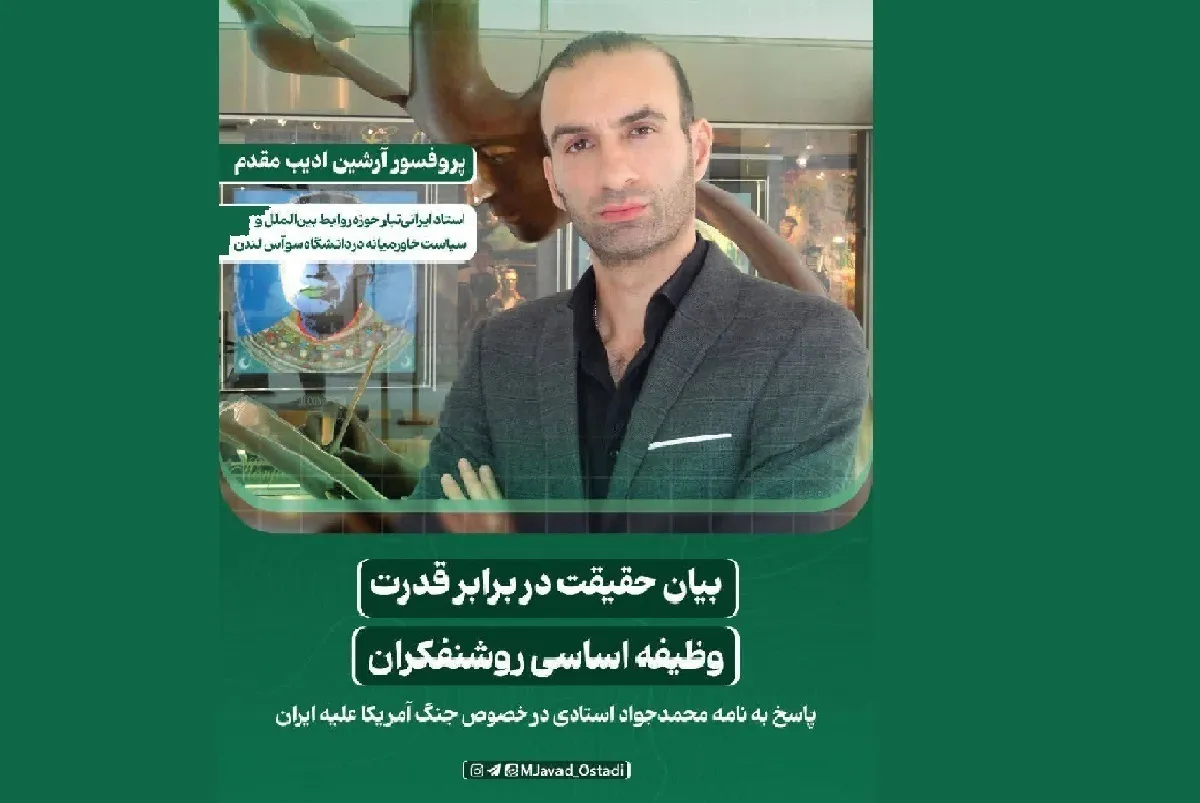
Leading academics from Europe and the United States denounced recent military attacks on Iran as illegal and illegitimate, underlining ethical responsibility of intellectuals to defend international law and support Iranian people.
Several prominent scholars from internationally renowned universities voiced strong opposition to recent military attacks against Iran, describing them as criminal actions lacking any legal or moral justification.
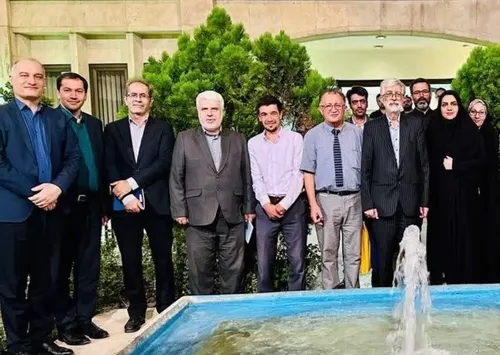
Their positions emerged through professional correspondence with Mohammad Javad Ostadi, director of the Razavi School of Art mega‑project, within the framework of elite diplomacy.
The academics stressed that silence in the face of US-Israeli aggression contradicts core intellectual and humanitarian values.
At a time when segments of Western media have attempted to normalize or obscure realities of the attacks, these scholars adopted clear analytical and critical positions.
They emphasized that academic platforms should stand as centers for truth‑telling, legal reasoning, and ethical reflection rather than political conformity.
This stance reflects growing awareness within parts of the global academic community.
According to Professor Arshin Adib‑Moghaddam of SOAS University of London: “Intellectuals play a major role in confronting power structures”.
“These attacks are illegal and criminal, and scholars have a duty to expose such actions and document resilience of Iranian society.”
He further stressed that narrating experiences of affected nations is an essential academic responsibility.
Dr. Vijay Prashad, director of the Tricontinental: Institute for Social Research, analyzed strategic consequences of the attacks. “Ambiguity surrounding United States military objectives risks regional instability and miscalculation.”
Prashad maintained that Iran’s resilience has disrupted prevailing power equations and may ultimately enhance its diplomatic leverage.
Professor Arlie Russell Hochschild of the University of California, Berkeley, focused on international law, explaining that “Without authorization from the United Nations Security Council, these attacks clearly violate international law.”
Hochschild also pointed to growing dissent within American academic and social circles, many of which express solidarity with Iranian people.
Collectively, these responses demonstrate a notable convergence among segments of the international intellectual community.
They underscore renewed calls for adherence to international law, ethical responsibility, and principled opposition to unlawful military actions in global affairs.
Related News

Post comments
- Editor's suggestion
- Latest news
IRIU, Ministry of Foreign Affairs forge scientific diplomacy ties
Future diplomats tour Imam Reza Shrine
Iraqi students visit Imam Reza Shrine
Razavi University, al-Mustafa International University launch joint cooperation center
Malek Museum unveils exhibition on devotion to Prophet Muhammad
Khorasan Razavi MPs support AQR development plans for Imam Reza Shrine
AQR research deputies strengthen international synergy
Darvazeh Bathhouse reflects Safavid-era history in Mashhad: Expert
Sunni influencer recalls shattered stereotypes during visit to Imam Reza Shrine
International Islamic Unity Conference continues strategic vision of Iran’s leaders
Iran is a unique model of peaceful coexistence: Muslim activist
Imam Reza Shrine plays pivotal role in Islamic unity: Bahraini scholar
40th Islamic Unity Conference concludes in Mashhad
40th Islamic Unity Conference concludes in Mashhad
Imam Reza Shrine adorned for birth anniv. of Prophet, Imam Sadiq
Arab pilgrims honor birth anniv. of Prophet, Imam Sadiq
Afghan collector donates rare stamps to AQR
Imam Reza Intl. University, Razavi University expand international cooperation
AQR Custodian meets martyr Larijani's family members
Intl. landscape design and memorial space competition for Shajareh Tayyebeh School martyrs' cemetery
Dust-cleaning ceremony held at Imam Reza Shrine
Campaigns