Seminary students heirs to prophets, divine saints in guiding society: Custodian

Ayat. Ahmad Marvi believes that seminary students carry a divine mission in continuation of the path of prophets and divine saints, bearing the responsibility of explaining religious teachings and guiding society.
According to Ayat. Ahmad Marvi, the Custodian of Astan Qods Razavi (AQR), “Seminary students are heirs to the path of prophets and divine saints in guiding society”.
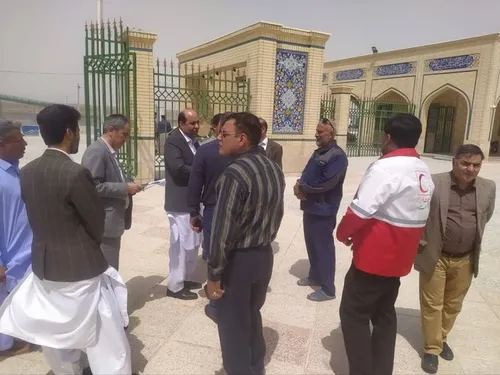
During his trip to southern parts of Khorasan Razavi Province on Saturday, May 30, Ayat. Marvi traveled to Bardeskan and met with teachers, seminary students from women’s and men’s seminaries, and preachers of the county at Imam Sadeq Seminary in Bardeskan.
Emphasizing that seminary study is not a job or profession but a divine mission in continuation of the path of prophets and divine saints, he said: “A seminary student must properly understand his position, responsibility, and mission, and know what duty he bears in guiding society.”
Referring to the noble hadith, ‘May God have mercy on one who knows his own worth’, the top official added: “Self-knowledge and understanding one’s divine position and responsibility are among the most important needs of human beings, and a seminary student who knows his mission will accept hardships and difficulties of this path wholeheartedly.”
He stressed: “The path of a seminary student is the continuation of the path of divine prophets, and just as the duty of prophets was to guide humanity, seminary students are also responsible for explaining divine teachings and guiding society.”
Citing Prophet Muhammad’s statement to Imam Ali when sending him to Yemen, Ayat. Marvi noted: “According to the Prophet’s words, guiding even one person has a value greater than all that over which the sun rises and sets. This underscores the greatness of the mission of guidance in Islam.”
He continued: “When a seminary student understands the value and importance of this mission, enduring deprivation, hardship, and difficulties of this path will become easy and sweet for him.”
Referring to the struggles of the martyred Leader of the Islamic Revolution during his battle against the tyrannical monarchical rule, AQR Custodian said: “Despite enduring imprisonment, exile, and various restrictions, the martyred Leader never retreated from his divine ideals, for he fully understood his mission and objective.”
He added: “While past hostilities against Islamic teachings relied on misleading books, today’s enemies target youth’s minds through cyberspace. Seminary students must engage with insight, awareness, and active presence to counter these threats.”
Ayat. Marvi underscored recognizing duty and fulfilling it as the primary responsibility of seminary students: “Imam Khomeini and the martyred Leader were manifestations of divine guidance, continuing the path of prophets and saints. This divine light will remain eternal.”
The Custodian of AQR, addressing preachers in Bardeskan, emphasized the need to deepen understanding of Imamate and its significance: “Unfortunately, in some cases, there is weakness in insight and knowledge regarding the position of Imamate. This sacred station is not defined by humans but is a divine appointment from God the Almighty.”
He stressed that religious preachers must properly explain the truth of Imamate and the concept of Velayat (Guardianship) to ensure public acceptance is rooted in faith, insight, and knowledge—not slogans, emotions, or fleeting sentiments.
Highlighting the Prophet’s rational and logical approach to spreading Islam, he said: “The Islam the Prophet presented was built on reason, argument, and logic. Religious preachers must similarly base their outreach on these principles.”
Ayat. Marvi outlined key requirements for effective religious preaching: “Understanding the audience is vital. A preacher must recognize the intellectual capacity, receptivity, and needs of his audience. Utilizing authentic and reliable narrations is also essential for impactful communication.”
Citing the Prophet and Imam Ali’s influence through conduct and ethics, he added: “People were not merely drawn to the Prophet’s words but to his character, ethics, and lifestyle. Similarly, Imam Ali’s personality and actions guided people to the truth.”
The top official urged preachers to embody Islamic values: “A religious preacher must attract people to the Quran, Ahl al-Bayt, and Islamic values through his behavior, ethics, and lifestyle. The great religious leaders influenced hearts not only through speech but through action and conduct.”
Referring to the martyred Leader’s popularity, he said: “Public affection for the martyred Leader stemmed not only from his speeches but from his lifestyle, sincerity, simplicity, and steadfastness in upholding revolutionary and divine ideals.”
Ayat. Marvi stressed the necessity of aligning actions with teachings: “Whatever we invite people to, we must first embody ourselves. A preacher’s behavior, speech, interaction style, and communication methods determine the effectiveness of religious outreach.”
He emphasized the importance of logical and reasoned explanations: “We must strive to explain Islamic rulings and teachings with precision, logic, and argument to convince people of religious truths.”
Identifying the preacher’s key duty in the era of occultation, head of AQR said: “Religious scholars must strengthen the bond between the people and Imamate and Vilayat. They must remain present among the people, address their questions and concerns, and deepen religious and revolutionary beliefs.”
He called for active engagement with societal issues: “Religious scholars must deepen the spiritual and revolutionary movements of the people, address doubts and questions, and safeguard national unity—a principle consistently emphasized by the Leader of the Islamic Revolution, Ayat. Seyyed Mojtaba Hosseini Khamenei.”
Warning of enemy conspiracies, Ayat. Marvi stated: “Today’s enemies mostly embark on fracturing unity, solidarity, and national cohesion. The more social unity weakens, the closer the enemy comes to achieving its goals.”
He concluded: “Religious scholars must protect societal unity with insight, awareness, and active presence among the people, guiding public emotions and sentiments toward divine direction and depth.”
Related News
Post comments
- Editor's suggestion
- Latest news
IRIU, Ministry of Foreign Affairs forge scientific diplomacy ties
Future diplomats tour Imam Reza Shrine
Iraqi students visit Imam Reza Shrine
Razavi University, al-Mustafa International University launch joint cooperation center
Malek Museum unveils exhibition on devotion to Prophet Muhammad
Khorasan Razavi MPs support AQR development plans for Imam Reza Shrine
AQR research deputies strengthen international synergy
Darvazeh Bathhouse reflects Safavid-era history in Mashhad: Expert
Sunni influencer recalls shattered stereotypes during visit to Imam Reza Shrine
International Islamic Unity Conference continues strategic vision of Iran’s leaders
Iran is a unique model of peaceful coexistence: Muslim activist
Imam Reza Shrine plays pivotal role in Islamic unity: Bahraini scholar
40th Islamic Unity Conference concludes in Mashhad
40th Islamic Unity Conference concludes in Mashhad
Imam Reza Shrine adorned for birth anniv. of Prophet, Imam Sadiq
Arab pilgrims honor birth anniv. of Prophet, Imam Sadiq
Afghan collector donates rare stamps to AQR
Imam Reza Intl. University, Razavi University expand international cooperation
AQR Custodian meets martyr Larijani's family members
Intl. landscape design and memorial space competition for Shajareh Tayyebeh School martyrs' cemetery
Dust-cleaning ceremony held at Imam Reza Shrine
Campaigns