International Islamic Unity Conference continues strategic vision of Iran’s leaders
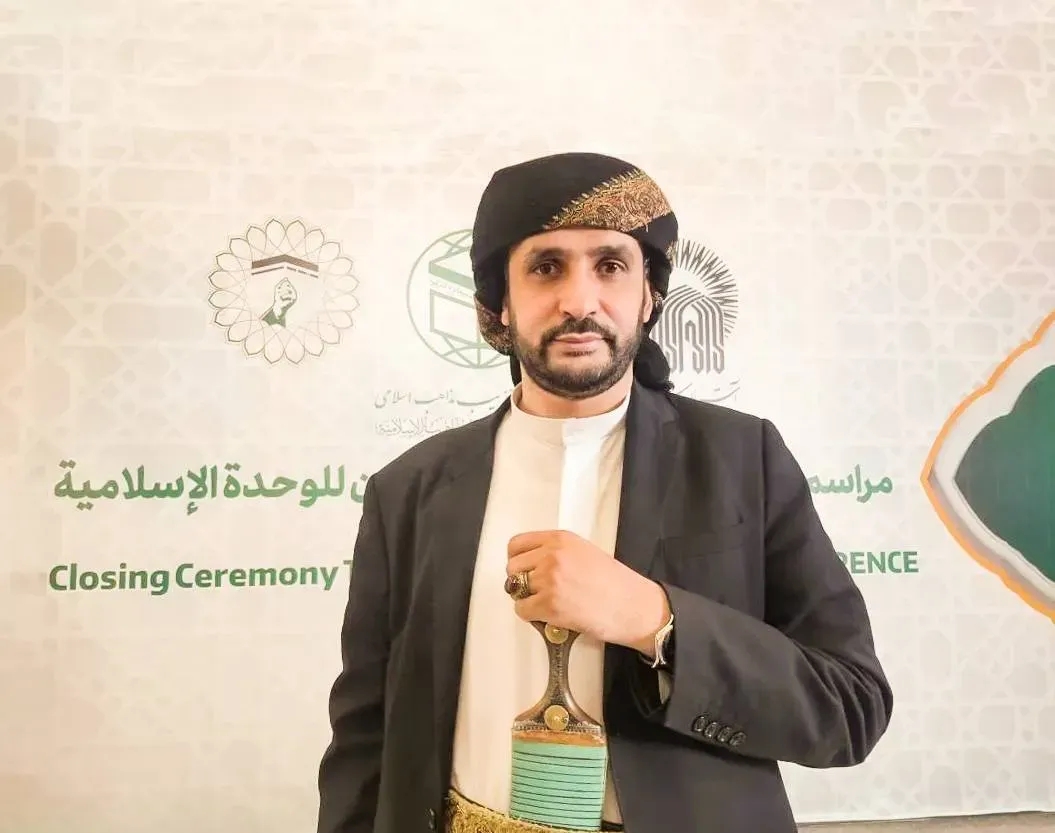
Speaking on the sidelines of the International Islamic Unity Conference in Mashhad, Seyyed Ahmad Abdul-Malik, a cultural and promotional activist of Yemen’s Ansarullah movement, emphasized the strategic importance of the gathering, describing it as a continuation of the broader strategy pursued by the founder of the Islamic Republic and the Martyred Leader of the Islamic Revolution to promote solidarity across the Islamic Ummah.
In an exclusive interview with Astan News, he explained various dimensions of the resistance front and analyzed the reasons behind the enemies’ attacks on Islamic countries and Yemen’s cultural symbols.
Referring to the active participation of Yemeni delegations in the Islamic Unity Conference in Iran, Seyyed Ahmad Abdul-Malik stated: “This movement is part of the broader strategy pursued by the Martyred Leader of the Ummah, Ayatollah Seyyed Mojtaba Khamenei, and other martyrs of the resistance front.”
Abdul-Malik said: “Our message at this gathering is clear: we have come together to declare in a loud voice that no factor can divide the Islamic Ummah. We stand united and integrated in adherence to the Quran and religious values, and it is the duty of all Muslims to adopt a common position against the divisive policies of colonialism and the system of hegemony.”
Strongly criticizing the continued efforts by the United States and the Zionist regime to undermine and fragment Islamic countries, he added: “All projects designed to weaken and fragment Muslim countries, particularly the Islamic Republic of Iran, have failed completely thanks to adherence to divine guidance and the wise leadership of the late Imam (RA) and the Martyred Leader of the Ummah. All these plans were thwarted.”
The Yemeni activist emphasized: “The spirit of standing against oppression manifested in Imam Khomeini (RA) and the Martyred Leader (RA) now runs through the entire resistance front. This spirit is the very factor that has brought about practical unity on the battlefields against global Zionism, despite the different religious tendencies within the Islamic world. The future of the Islamic world and the Shia world is moving toward greater authority and liberation from colonialism.”
Responding to a question about the cultural symbols of the Yemeni people, particularly the “janbiya,” a traditional Yemeni dagger worn around the waist, which is commonly carried by Yemeni fighters, Abdul-Malik said: “This weapon is an ornament of men and a symbol of the dignity and zeal of the Yemeni people. We regard the janbiya as part of our combat identity—a weapon that symbolizes resistance to the divisive policies of the West and the United States. Just as Seyyed Abdul-Malik al-Houthi is known today as a symbol of resistance, the culture of resistance in Yemen is also intertwined with these traditional symbols.”
Referring to the deep and strategic relations between the Islamic Republic of Iran and Yemen, particularly following the lifting of the air blockade and the establishment of direct flights, Seyyed Ahmad Abdul-Malik said the presence of Yemenis in Iran has become more tangible than ever before.
He said: “The Yemeni people cherish the holy shrine of Imam Reza (AS) with great love. If the air blockade and the cruel sanctions against Yemen are lifted, we will witness a widespread and unprecedented influx of Yemenis traveling to Mashhad for pilgrimage. Love for the Eighth Imam (AS) has created an unbreakable bond between the peoples of Iran and Yemen, a bond that cannot be severed by any blockade.”
In conclusion, emphasizing that the blood of martyrs on the path of unity guarantees final victory, Abdul-Malik noted: “The martyrdom of great leaders has not weakened the resistance front; rather, it has strengthened our resolve to continue along this path. Today, Islamic unity is not merely a slogan; it is an inevitable necessity for standing against the Zionist project in the region, which, with God’s help and the unity of Muslims, is doomed to failure.”
Related News
Post comments
- Editor's suggestion
- Latest news
Future diplomats tour Imam Reza Shrine
Iraqi students visit Imam Reza Shrine
Razavi University, al-Mustafa International University launch joint cooperation center
Malek Museum unveils exhibition on devotion to Prophet Muhammad
Khorasan Razavi MPs support AQR development plans for Imam Reza Shrine
AQR research deputies strengthen international synergy
Darvazeh Bathhouse reflects Safavid-era history in Mashhad: Expert
Sunni influencer recalls shattered stereotypes during visit to Imam Reza Shrine
International Islamic Unity Conference continues strategic vision of Iran’s leaders
Iran is a unique model of peaceful coexistence: Muslim activist
Imam Reza Shrine plays pivotal role in Islamic unity: Bahraini scholar
40th Islamic Unity Conference concludes in Mashhad
40th Islamic Unity Conference concludes in Mashhad
Imam Reza Shrine adorned for birth anniv. of Prophet, Imam Sadiq
Arab pilgrims honor birth anniv. of Prophet, Imam Sadiq
Afghan collector donates rare stamps to AQR
Imam Reza Intl. University, Razavi University expand international cooperation
AQR Custodian meets martyr Larijani's family members
Intl. landscape design and memorial space competition for Shajareh Tayyebeh School martyrs' cemetery
Dust-cleaning ceremony held at Imam Reza Shrine
Dust-cleaning ceremony held at Imam Reza Shrine
Campaigns