Islamic Research Foundation, Tokyo University sign five-year cooperation pact

Agreement opens new chapter of joint academic projects in Iranian, Islamic and regional studies.
The Islamic Research Foundation of Astan Quds Razavi and the Institute of Languages and Cultures of Asia and Africa at Tokyo University of Foreign Studies have signed a five-year cooperation agreement to expand joint academic work in Iranian, Islamic and regional studies.
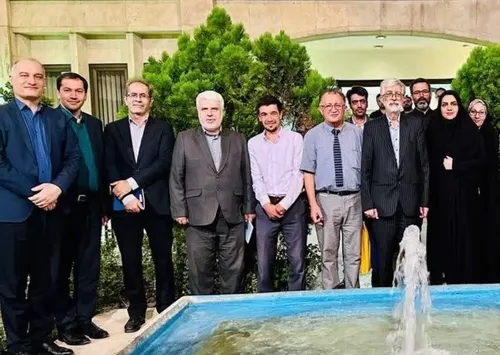
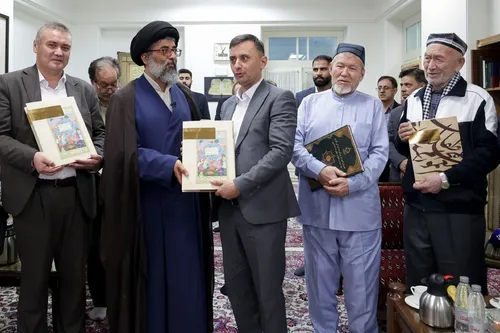
The agreement was formalized in a ceremony attended by Dr. Ahad Faramarz Qaramaleki, head of the foundation, and Dr. Nobuaki Kondo, director of the Institute of Languages and Cultures of Asia and Africa.
Under the pact, the two institutions will collaborate on joint university projects, hold academic meetings, symposia and conferences, publish co-authored works, and facilitate scholarly exchange among researchers.
Founded in 1873, Tokyo University of Foreign Studies is one of Japan’s most prestigious centers for international studies, maintaining academic cooperation with more than 35 universities worldwide. The Institute of Languages and Cultures of Asia and Africa, redefined in 2010 under Japan’s Ministry of Science with a research-applied approach, is beginning its first official collaboration with an Iranian institution through this agreement.
Persian language, Iranian culture and civilization are among the institute’s main research areas, with numerous publications in the field. Khorasan, Mashhad and Imam Reza shrine are also subjects of interest for Japanese researchers.
Professor Kondo, a specialist in Iranian history, focuses on Persianate world literature and pre-modern Islamic state systems. He believes that the pace of global change makes research on Asian and African languages and cultures more essential than ever.
The Islamic Research Foundation has previously cooperated with scholars from the institute, including the translation and publication of Kondo’s book Iranian Documents – Social History of Iran and Turan from the 10th to 14th centuries AH in 2017, and a scientific meeting with Dr. Yui Kanda on the Imam Reza shrine in winter 2024.
The agreement was finalized after specialized negotiations by the foundation’s director of academic cooperation during his participation in a symposium at Tokyo University of Foreign Studies in early 2025, followed by mutual follow-ups and approval by the institute’s director.
The main goals of this cooperation include promoting the foundation’s research internationally, improving research quality, adopting modern methodologies, exchanging data, and organizing joint workshops and academic sessions.
Related News



Post comments
- Editor's suggestion
- Latest news
IRIU, Ministry of Foreign Affairs forge scientific diplomacy ties
Future diplomats tour Imam Reza Shrine
Iraqi students visit Imam Reza Shrine
Razavi University, al-Mustafa International University launch joint cooperation center
Malek Museum unveils exhibition on devotion to Prophet Muhammad
Khorasan Razavi MPs support AQR development plans for Imam Reza Shrine
AQR research deputies strengthen international synergy
Darvazeh Bathhouse reflects Safavid-era history in Mashhad: Expert
Sunni influencer recalls shattered stereotypes during visit to Imam Reza Shrine
International Islamic Unity Conference continues strategic vision of Iran’s leaders
Iran is a unique model of peaceful coexistence: Muslim activist
Imam Reza Shrine plays pivotal role in Islamic unity: Bahraini scholar
40th Islamic Unity Conference concludes in Mashhad
40th Islamic Unity Conference concludes in Mashhad
Imam Reza Shrine adorned for birth anniv. of Prophet, Imam Sadiq
Arab pilgrims honor birth anniv. of Prophet, Imam Sadiq
Afghan collector donates rare stamps to AQR
Imam Reza Intl. University, Razavi University expand international cooperation
AQR Custodian meets martyr Larijani's family members
Intl. landscape design and memorial space competition for Shajareh Tayyebeh School martyrs' cemetery
Dust-cleaning ceremony held at Imam Reza Shrine
Campaigns