Congress commemorating 50th anniversary. of Ayat. Milani concludes with major scholarly achievements

Event in Mashhad highlights participation of 800 scholars, unveiling of new works, and revival of jurisprudential legacy.
The international congress marking the 50th anniversary of the passing of Ayat. Seyyed Mohammad Hadi Hosseini Milani concluded in Mashhad with significant scholarly and cultural outcomes.
Organized by Astan Quds Razavi (AQR) and the Khorasan seminary, the event brought together leading scholars from Iran, Iraq, and beyond to revisit the intellectual, ethical, and civilizational contributions of the late Shia authority.
Dr. Abdolhamid Talebi, head of AQR’s Scientific and Cultural Organization, described the congress as “a landmark achievement”.
“The opening session featured a video message from the Leader of the Islamic Revolution and a written message from Grand Ayat. Ja’far Subhani”, he noted.
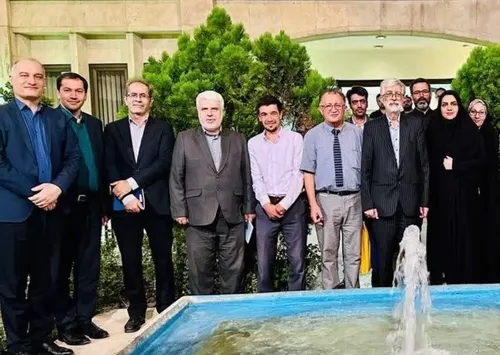
Senior scholars including Ayat. Alireza Arafi, Ayat. Mohammad Mehdi Shabzendedar, Ayat. Seyyed Ebrahim Alamolhoda, and Ayat. Marvi addressed Milani’s scholarly stature, many of them being his direct students or trained in his tradition.
The congress hosted six specialized sessions on jurisprudence and principles, Quranic exegesis, philosophy and theology, Islamic unity, and educational reform.
Talebi emphasized Milani’s pioneering role in modernizing seminary education in Mashhad, establishing schools with new curricula that transformed the scholarly environment.
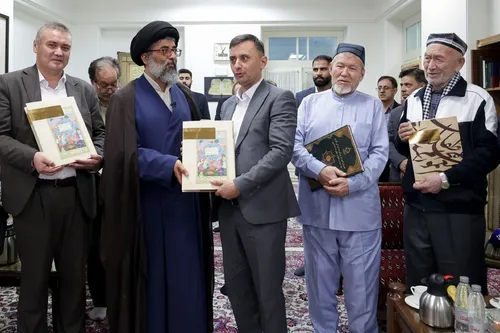
“Twelve new scholarly works were unveiled, including recovered lecture notes of Ayat. Seyyed Ebrahim Alamolhoda, which shed fresh light on principles of jurisprudence”, the official added.
Elsewhere in the event, Dr. Ahad Faramarz Qaramaleki, president of the congress, highlighted the unprecedented participation of 800 scholars and seminary teachers at the opening ceremony.
“The turnout reflected Milani’s enduring influence and the thirst of younger generations for authentic role models. Discussions revealed lesser known aspects of Milani’s mystical and ethical conduct, his role in promoting unity among Islamic schools, and his pioneering efforts in establishing schools for women”, Qaramaleki stressed.
Also, a specialized session on Milani’s jurisprudential, principles, and hadith perspectives further underscored his methodological precision.
Speaking in the session, Ayat. Rabani Birjandi explained Milani’s insistence on deriving legal terminology from authentic historical sources and his caution against issuing rulings based solely on popular scholarly opinions.
According to Ayat. Yasin al Hosseini of Najaf, “There is a need for academic unity between seminaries in Iran and Iraq, which can benefit from joint sessions and exchanges to strengthen Islamic scholarship”.
The congress concluded with renewed commitment to preserving Milani’s intellectual heritage, reinforcing the discourse of religious authority, and promoting scholarly cooperation across the Islamic world.
Related News
Post comments
- Editor's suggestion
- Latest news
Islamic Revolution’s message transcends national borders
6th Imam Reza International Congress concludes
Intl. scholars explore Razavi justice, resistance against structures of domination
Researchers explore the Ahl al-Bayt’s (AS) distinctive perspectives on justice
Imam Reza Congress, vital platform for strengthening unity of Islamic Ummah
African thinker highlights inseparable link between Razavi teachings, governance model of Martyred Leader
Martyred Leader’s martyrdom resonates across religious boundaries in Latin America
Imam Reza Shrine remains a focal point of convergence for nations, religions
Human rights defined through Imam Reza’s teachings, human dignity: Scholar
Imam Reza’s teachings, “jihad of clarification” ensure invincibility of Resistance: Yemeni researcher
US researcher links Imam Reza’s foresight, Martyred Leader’s legacy to governance
International scholars examine human dignity and rights in light of Imam Reza’s teachings
Scholars examine formation of an independent and self-reliant resistance front against hegemonic powers
6th Imam Reza International Congress explores human rights, Razavi teachings
RUIS professor explains various dimensions of Abdul Azim Hassani’s lifestyle and teachings
Razavi shrine library, a treasury of Persian poets works
Imam Reza’s legal perspectives have gained global prominence
Global power redefined through Razavi teachings and reflected in a leadership model
IRIU, Ministry of Foreign Affairs forge scientific diplomacy ties
Future diplomats tour Imam Reza Shrine
Iraqi students visit Imam Reza Shrine
Campaigns