Congress on Ayat. Milani highlights scholarly mastery, political activism, historic migration, philosophical depth Four perspectives converge to portray Shia authority as jurist, activist, reformer, and thinker.
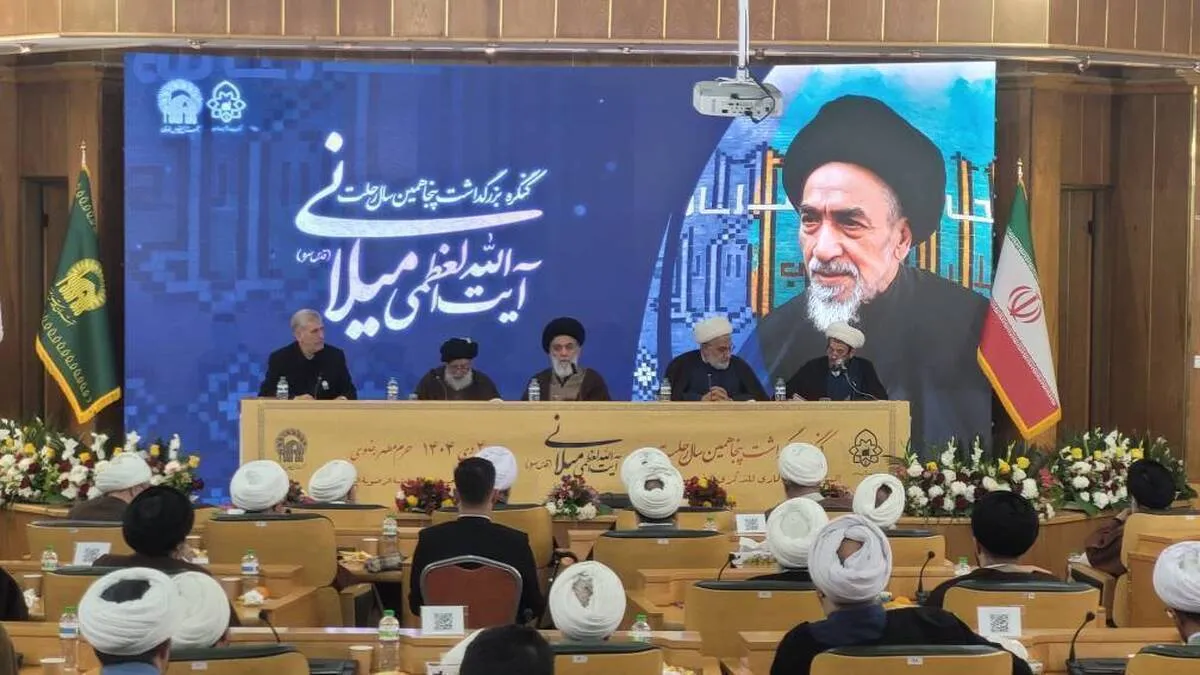
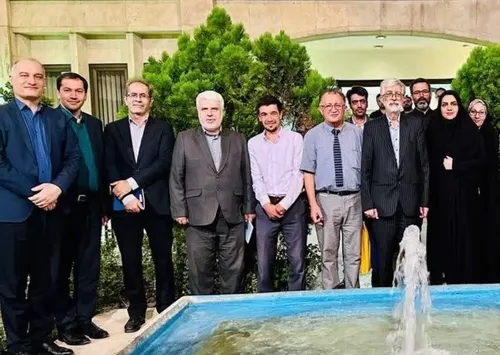
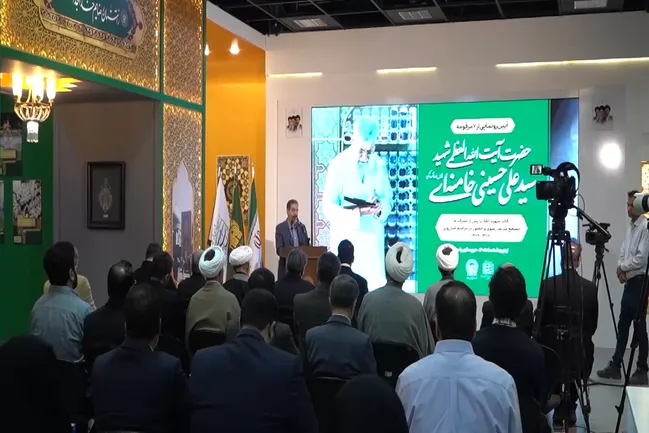
The international congress marking the 50th anniversary of the passing of Ayat. Seyed Mohammad Hadi Hosseini Milani concluded in Mashhad with a series of sessions and tributes that underscored his multifaceted legacy.
Senior scholars and researchers described Milani as a figure of rare scholarly mastery, a political activist in times of crisis, a reformer who revitalized the Khorasan seminary, and a philosopher whose rational approach deepened theological discourse.
Ayat. Seyed Jafar Seyedan, senior seminary professor, praised Milani’s unmatched command of jurisprudence, principles, and seminary sciences.
He recalled Milani’s organized struggle against sectarian deviations and Wahhabi propaganda, noting, “His strategic dispatch of preachers safeguarded Shia doctrinal boundaries”.
Seyedan emphasized: “Milani’s stature transcended description, embodying both scholarly excellence and social responsibility”.
Speaking in a televised session of Dar al Ilm, Hoj. Ali Rad of Tehran University explored Milani’s political thought through the “crisis framework.”
He argued: “Milani’s activism was shaped by Iran’s political, cultural, and economic upheavals under the Pahlavi regime”.
He highlighted Milani’s outspoken criticism of dictatorship, colonial influence, and cultural erosion, as well as his explicit support for Imam Khomeini’s movement.
“Milani believed firmly in establishing an Islamic government, grounded in Sharia, law, independence, and oversight by religious authority”, Rad asserted.
Hoj. Ali Khayyat, director of the Khorasan seminary, described Milani’s migration from Najaf to Mashhad in the 1950s as a civilizational turning point.0
He called the move a “scientific renaissance” that ended the seminary’s stagnation and restored Mashhad’s role as a center of Shia authority.
“Milani was influential on future leaders, including Ayat. Seyyed Ali Khamenei, and his pioneering role in establishing institutions for women’s religious education, countering cultural assaults of the Pahlavi era”, Khayyat noted.
In another specialized session, Dr. Ahad Faramarz Qaramaleki, president of the Islamic Research Foundation of Astan Quds Razavi, emphasized the philosophical dimension of Milani’s thought.
“Milani used rational analysis to resolve apparent contradictions in Qur’anic verses, particularly on doctrines such as infallibility”, he explained.
“Philosophy”, he argued, “was not a substitute for belief but a tool to deepen theological understanding, making Milani’s works a lasting model for scholarly dialogue and unity”.
Together, these perspectives presented Milani as a comprehensive figure whose legacy continues to shape jurisprudence, politics, education, and theology in the Shia world.
Post comments
- Editor's suggestion
- Latest news
Islamic Revolution’s message transcends national borders
6th Imam Reza International Congress concludes
Intl. scholars explore Razavi justice, resistance against structures of domination
Researchers explore the Ahl al-Bayt’s (AS) distinctive perspectives on justice
Imam Reza Congress, vital platform for strengthening unity of Islamic Ummah
African thinker highlights inseparable link between Razavi teachings, governance model of Martyred Leader
Martyred Leader’s martyrdom resonates across religious boundaries in Latin America
Imam Reza Shrine remains a focal point of convergence for nations, religions
Human rights defined through Imam Reza’s teachings, human dignity: Scholar
Imam Reza’s teachings, “jihad of clarification” ensure invincibility of Resistance: Yemeni researcher
US researcher links Imam Reza’s foresight, Martyred Leader’s legacy to governance
International scholars examine human dignity and rights in light of Imam Reza’s teachings
Scholars examine formation of an independent and self-reliant resistance front against hegemonic powers
6th Imam Reza International Congress explores human rights, Razavi teachings
RUIS professor explains various dimensions of Abdul Azim Hassani’s lifestyle and teachings
Razavi shrine library, a treasury of Persian poets works
Imam Reza’s legal perspectives have gained global prominence
Global power redefined through Razavi teachings and reflected in a leadership model
IRIU, Ministry of Foreign Affairs forge scientific diplomacy ties
Future diplomats tour Imam Reza Shrine
Iraqi students visit Imam Reza Shrine
Campaigns