2nd preparatory session for 6th Intl. Congress on Imam Reza held in Tehran
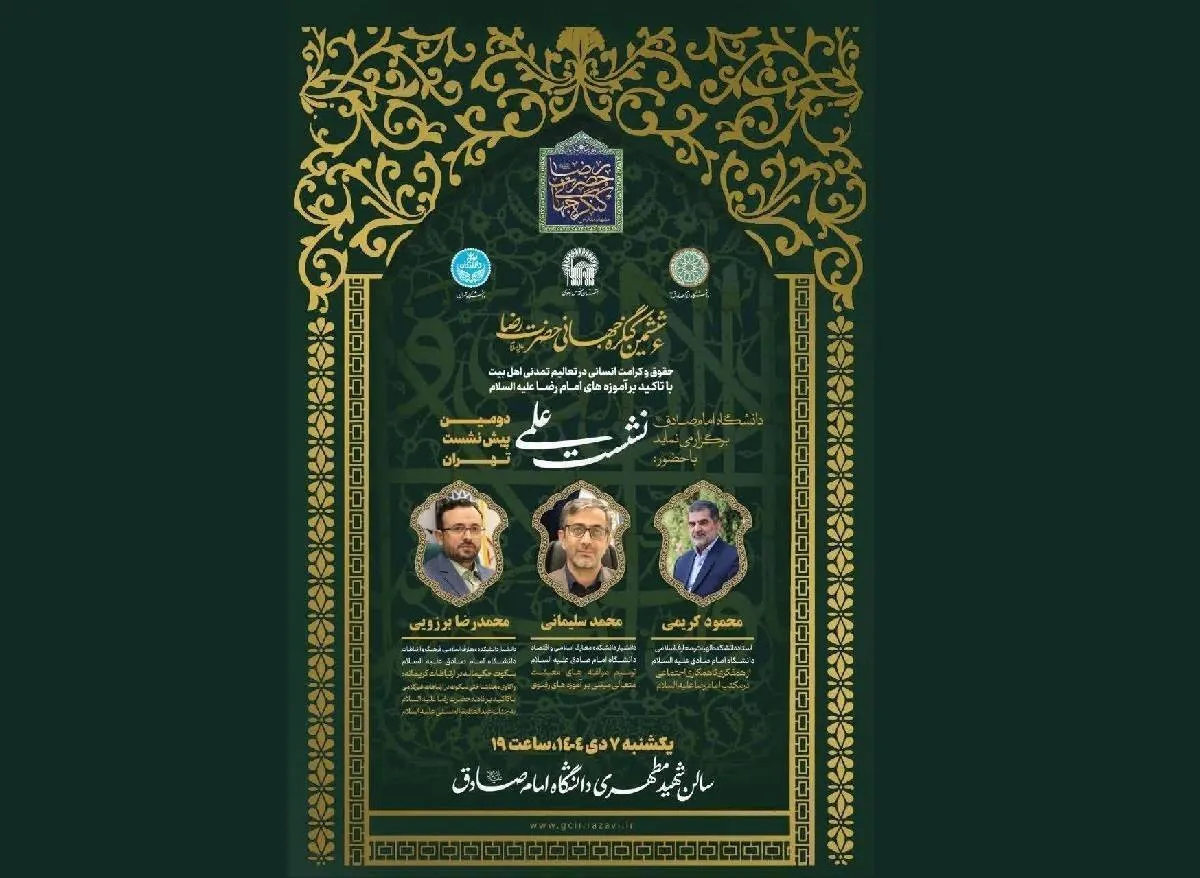
Scholars highlight collective wisdom, strategic silence, and elevated livelihood in light of Imam Reza’s teachings.
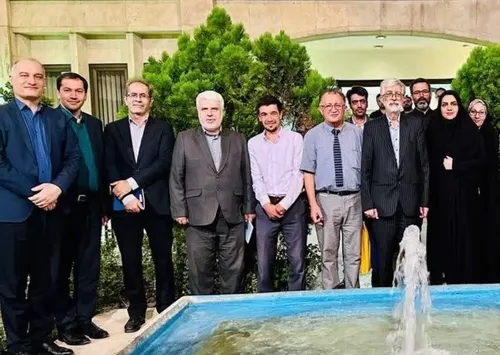
The second preparatory session for the Sixth International Congress on Imam Reza was held at Shahid Motahhari Hall of Imam Sadiq University in Tehran, organized in cooperation with Astan Quds Razavi (AQR), Imam Sadiq University, and Tehran University.
The session brought together leading academics to explore social, communicative, and economic dimensions of Imam Reza’s legacy.
Speaking in the event, Dr. Mahmoud Karimi, professor of theology, emphasized consultation as a prerequisite for social cooperation and the formation of “collective wisdom.”
Drawing on the traditions of the Ahl al Bayt, he explained: “Seeking opinions from all segments of society, even the marginalized, reduces errors and strengthens public participation”.
He warned against self centered decision making and noted that Imam Musa al Kazim consulted even with servants, teaching that divine solutions may emerge from unexpected voices.
“Consultation must avoid the fearful, the miserly, and the greedy, as each obstructs sound judgment” Karimi stressed.
Dr. Mohammadreza Barzoui, associate professor of Islamic studies and communication, analyzed Imam Reza’s strategic letter to Abd al Azim al Hasani, describing “silence” as an intelligent communicative act rather than passivity.
“Silence preserves fraternity, prevents futile disputes, and opens the door to wisdom”, he argued.
Citing Imam Reza’s words, he noted: “Silence is a gate to wisdom, bringing affection and guiding to every good”.
Barzoui explained that silence, as part of non verbal communication, conveys meaning and strengthens social cohesion, serving as a safeguard against division.
Elsewhere, Dr. Mohammad Soleimani, associate professor of Islamic economics, presented the concept of “elevated livelihood” (ma’ishat e mota’ali) based on Imam Reza’s teachings.
He contrasted this model with Western economic paradigms, arguing, “Livelihood in the Islamic view transcends profit and material comfort, integrating ethics, moderation, and social responsibility”.
Soleimani outlined five pillars: turning economic activity into a path for personal growth, balancing human dimensions, enabling self realization, prioritizing cooperation and empathy, and emphasizing responsibility toward society and the environment.
“Wealth should serve as a ladder for faith and human perfection, not as an end in itself”, he stressed.
The session underscored the relevance of Imam Reza’s teachings for contemporary challenges, offering frameworks for collective decision making, ethical communication, and spiritually grounded economic life.
Related News
Post comments
- Editor's suggestion
- Latest news
Islamic Revolution’s message transcends national borders
6th Imam Reza International Congress concludes
Intl. scholars explore Razavi justice, resistance against structures of domination
Researchers explore the Ahl al-Bayt’s (AS) distinctive perspectives on justice
Imam Reza Congress, vital platform for strengthening unity of Islamic Ummah
African thinker highlights inseparable link between Razavi teachings, governance model of Martyred Leader
Martyred Leader’s martyrdom resonates across religious boundaries in Latin America
Imam Reza Shrine remains a focal point of convergence for nations, religions
Human rights defined through Imam Reza’s teachings, human dignity: Scholar
Imam Reza’s teachings, “jihad of clarification” ensure invincibility of Resistance: Yemeni researcher
US researcher links Imam Reza’s foresight, Martyred Leader’s legacy to governance
International scholars examine human dignity and rights in light of Imam Reza’s teachings
Scholars examine formation of an independent and self-reliant resistance front against hegemonic powers
6th Imam Reza International Congress explores human rights, Razavi teachings
RUIS professor explains various dimensions of Abdul Azim Hassani’s lifestyle and teachings
Razavi shrine library, a treasury of Persian poets works
Imam Reza’s legal perspectives have gained global prominence
Global power redefined through Razavi teachings and reflected in a leadership model
IRIU, Ministry of Foreign Affairs forge scientific diplomacy ties
Future diplomats tour Imam Reza Shrine
Iraqi students visit Imam Reza Shrine
Campaigns