AQR museums preserve foreign artifacts bearing name of Persian Gulf

Valuable foreign artifacts bearing the name of “Persian Gulf” in multiple languages are preserved in museums of Astan Qods Razavi (AQR), reflecting long‑standing global recognition of this historical name.
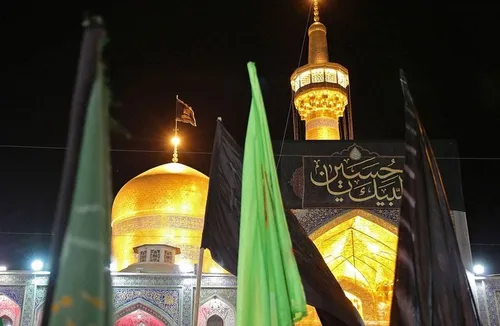
Museums affiliated with Astan Qods Razavi, the organization in charge of Imam Reza Shrine in Mashhad, northeast Iran, preserve numerous foreign artifacts that bear the name of “Persian Gulf.”
For Iranians, Persian Gulf is not merely crescent‑shaped waterway connected to Sea of Oman. It represents important part of Iran’s history and civilization. Because of its geostrategic position, Persian Gulf has long played influential role in development of societies, economy, politics, and international relations.
Organization of Libraries, Museums, and Documentation Center at Astan Qods Razavi safeguards diverse data-x-items connected to Persian Gulf, including manuscripts, documents, publications, and museum objects written in different languages. Among these collections, several artifacts displayed in museums of Imam Reza Shrine prominently feature the name of Persian Gulf and demonstrate historical use of the name of this waterway in international sources.
One notable artifact is historical map written in German that was presented in September 1999 by Thomas Klestil, then president of Austria. The name of Persian Gulf appears clearly on this map in German as “Persischer Meerbusen.” The map measures 46 by 56 centimeters and dates back to nineteenth century, reflecting European recognition of the historical name of this waterway.
Two nineteenth‑century globes produced in England are also preserved in AQR’s museums. The name of “Persian Gulf” is written clearly on both globes in English. One globe was produced in 1850 by Newton and his son and measures 36 centimeters in height and 22.5 centimeters in diameter. Another globe, produced in 1845 by Malbey, measures 57 centimeters in height and 47 centimeters in diameter and represents another historical example of the international use of this name.
Another valuable collection preserved in the museums includes envelopes addressed to the Persian Gulf in Iran. These envelopes were donated in 2017 by Iranian collectors Kazem Aghapour Alamdari and Allahverdi. The collection includes envelopes sent from numerous countries such as Belarus, Bulgaria, Estonia, France, Germany, Belgium, Poland, Serbia, India, Tajikistan, Italy, Ireland, Romania, United Kingdom, Japan, South Korea, Lithuania, Vietnam, Mauritius, Oman, Jordan, Qatar, Iraq, Peru, Guatemala, Taiwan, Thailand, United States, Canada, Brazil, Cuba, Chile, Hungary, South Africa, Tanzania, and Australia.
The addresses on all envelopes begin with “Persian Gulf,” clearly demonstrating wide international recognition of this historical name. Researchers and history enthusiasts can also explore these artifacts through virtual museum platform of Astan Qods Razavi at https://digimuseum.razavi.ir.
Related News




Post comments
- Editor's suggestion
- Latest news
Iran and Iraq form a united front against aggression, Iraqi organizer says
Ceremony honors Hussaini Mukibs at Imam Reza Shrine
Love for Ahl al-Bayt is an unbreakable bond between Iranian and Iraqi nations: Custodian
Imam Reza Shrine hosts ceremony honoring Iraqi Mukib operators
Iraqi Mukib operators voice brotherhood at Imam Reza Shrine
Festive atmosphere engulfs Imam Reza Shrine on Hazrat Zeinab’s birth anniversay
Imam Reza Shrine marks Hazrat Zeinab’s birth anniversary
Intl. architects unite to heal grief over Minab school martyrs
Requirements for Imam Reza International Congress assembly reviewed at Qom University
Engineering, maintenance, and restoration projects enhance pilgrim comfort at Imam Reza Shrine
Two Razavi servants from Markazi Province named among the world’s top 2% of scientists
Imam Reza Shrine’s English-speaking mourning group promotes the teachings of the Ahl al-Bayt (AS)
Tribes play key role in protecting national security, territorial integrity, economy: AQR Custodian
Deputy minister of cultural heritage, tourism and handicrafts visits AQR Central Library
Decline of Takfiri movements indicates success in promoting Islamic unity
IRIU contributes to international publication on quantum security
Prayer promotion starts with worshipers’ conduct: Custodian
IRIU announces publication of international book on quantum security
AQR publishes Quran pages attributed to handwriting of Imam Hossein (AS)
Introductory “In’ash al-Aql” course concludes with head of AQR Quranic Center in attendance
AQR Custodian Offers Condolences on Passing of Grand Ayatollah Shobeiri Zanjani
Campaigns