Prayer establishment among top priorities in Islamic nation: Leader
The 33rd National Prayer Summit commenced at the Imam Reza Shrine in Mashhad, northeast Iran, under the theme of the thought and practice of the martyred Leader of the Islamic Revolution, Ayatollah Seyyed Ali Khamenei. The summit features the full inaugural message delivered by the Leader of the Islamic Revolution, Ayatollah Seyyed Mojtaba Hosseini Khamenei, emphasizing the pivotal role of prayer establishment in society.
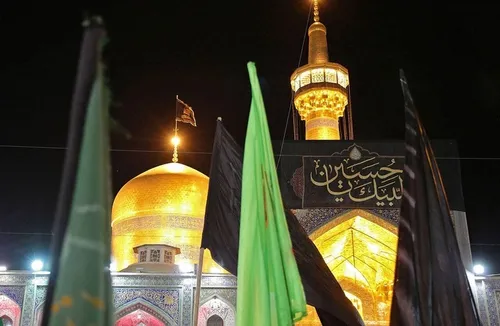
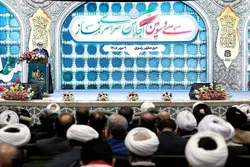
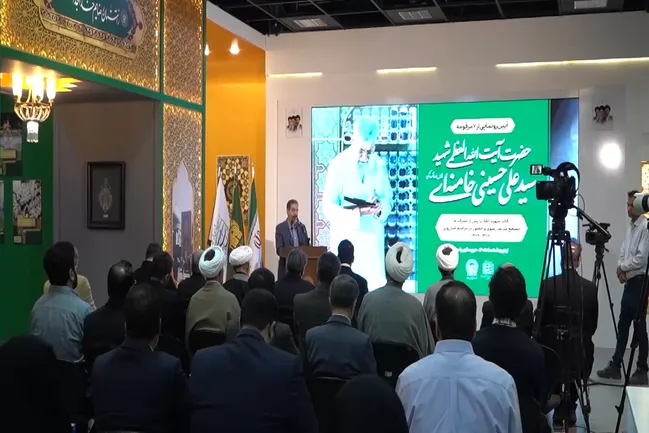
The 33rd National Prayer Summit kicked off on October 1 in the Quds Hall of the Imam Reza Shrine, under the theme, “Establishing Prayer in the Thought and Practice of the Martyred Leader Ayatollah Seyyed Ali Khamenei.”
The message of the Leader of the Islamic Revolution, Ayatollah Seyyed Mojtaba Hosseini Khamenei, was delivered at the opening ceremony by Hojatoleslam Mohsen Qomi, Deputy for Communications and International Affairs of the Leader’s Office.
The full text of the Leader’s message reads as follows:
“In the Name of God, the Compassionate, the Merciful,
Paying attention to the sublime matter of ‘establishing prayer,’ and specifically holding the Prayer Summit, is among the essential and necessary measures that took shape in the country in the early 1990s through the efforts of the popular and mujahid scholar, Quran teacher, and skilled preacher, Hojatoleslam Mohsen Qara’ati. The special attention of the great martyred Leader to this matter and his important, continuous, and emphatic recommendations in messages to the past 32 summits further underscore the significance of this policy.
Undoubtedly, speaking or writing about prayer is fitting for the station of divine revelation and the words of the Holy Prophet (PBUH) and the Infallible Imams. The pen of one such as myself is too humble to write on the depth of the teachings of prayer. However, the identity and requirements of the Islamic society and the duties of its servants—especially the Leadership of the Islamic Revolution—necessitate that I mention a few sentences in this regard for myself, the public, and officials.
Prayer is among the most beautiful and grand blessings of the Almighty God, the foremost institution, symbol, and pillar of religion, and the connecting link for each of us to maintain close, direct communion with the infinite and everlasting divine source. This elixir of salvation and pillar of a good life is both a steadfast, continuous support and an inexhaustible reservoir for human beings in their struggle against carnal and worldly evils, as well as an overflowing fountain of love, hope, kindness, and tranquility. The descent of divine blessings and the abundance of sustenance are realized and augmented through establishing prayer and seeking divine forgiveness.
However, the duty of prayer is not solely an individual obligation. According to Quranic teachings, establishing prayer is the foremost fruit and hallmark of the rule of the righteous: ‘Those who, if We give them power in the land, establish prayer.’ The articulation of this verse immediately after the promise of divine victory to God’s helpers and their struggle in Surah Al-Hajj indicates that establishing prayer—as a steadfast anchor for remembering God and placing hope and trust in Him—plays a unique role in struggle, conquest, and victory on the battlefields, especially the battlefield currently facing the Iranian nation.
Today, as the grounds for the empowerment and strength of the dear Iranian people are provided more than ever before, every individual of this chosen nation is addressed by this repeated divine command to establish prayer: ‘Establish prayer.’ Furthermore, all influential figures in society—from parents and families to teachers and friends, from professors and elites to well-known personalities and celebrities—as well as all culture-shaping institutions and bodies, including mosques, Friday prayers, schools, universities, Islamic seminaries, the Islamic Republic of Iran Broadcasting (IRIB), cultural and social activists, and the popular Basij, especially those in contact with adolescents and youth, bear a doubled responsibility in this regard.
Establishing prayer in all its complementary stages and evolutionary levels across society and a country that has raised the banner of pure Mohammadan Islam and is honored by Islamic governance is among the most paramount matters. It is essential for paving the way to transition from the stage of Islamic movement and revolution to the stage of the Islamic society, after which achieving the stage of Islamic civilization will become feasible.
Institutionalizing and universalizing prayer, followed by public efforts to perform it properly, constitute the two primary pillars of the campaign to reach this vital objective. The development of mosques and other arrangements to expand the quantity and enhance the outward quality of congregational and Friday prayers are prerequisites for attaining this significant destination. In all these aspects, the role of congregational and Friday prayer leaders—who must serve as a safe haven for people and possess an attentive ear receptive to their grievances—is remarkably prominent.
I hope that through divine grace and the special attention and prayers of our Master, Imam Mahdi (may God hasten his noble return), our dear nation and country will be successful and supported in establishing prayer and partaking in its grace and blessings.”
***
Following the inaugural message, the summit featured addresses by key cultural, educational, and religious officials, alongside an awards ceremony honoring selected institutions and families of martyrs.
The Custodian of Astan Qods Razavi (AQR), Ayatollah Ahmad Marvi, highlighted the legacy of the martyred Leader and emphasized that promoting prayer requires evaluating the root causes of indifference through expert sociological and psychological analysis.
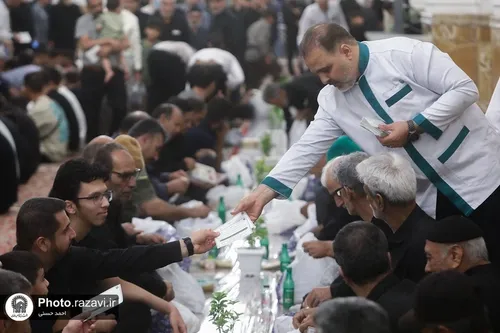
He noted: ”The practical conduct, speech, and social interactions of worshipers, alongside providing clean and dignified spaces for prayer, serve as the most effective form of practical invitation”.
Hojatoleslam Mohsen Qara’ati, Head of the National Prayer Headquarters, underlined the necessity of adopting modern and customized communication methods for youth and children, highlighting the importance of face-to-face propagation, home-based gatherings, and lifestyle alignment with the exemplary conduct of Imam Reza (AS).
The Minister of Education, Alireza Kazemi, outlined the ministry's roadmap for integrating prayer into educational institutions, reporting the holding of over 68,000 congregational school prayers, linking 10,000 schools with neighborhood mosques, and mobilizing 1,800 honorary prayer mentors across the country.
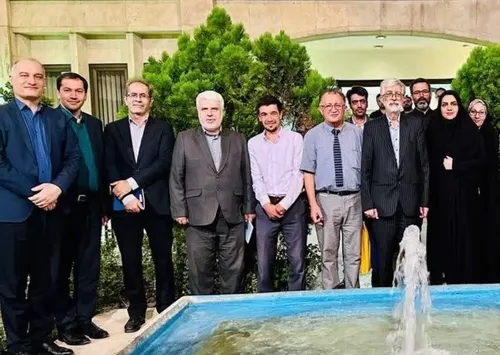
Dr. Gholam-Ali Haddad-Adel, member of the Expediency Discernment Council, emphasized that internal faith and religious education take precedence over mere legal enforcement in an Islamic governance model, calling for the establishment of accessible, well-maintained prayer rooms along transport routes and public spaces.
Tayyebeh Mahrouzadeh, mother of martyr Zahra Haddad-Adel, also highlighted the pivotal role of families in spiritual upbringing and mental well-being.
Hojatoleslam Mohammad-Javad Haj-Ali-Akbari, Head of the Policy-Making Council of Friday Prayer Imams, discussed the comprehensive role of mosques in social solidarity and crisis management through initiatives like the “Mehrab Plan” and the registration of over 75,000 mosques in a national database.
Concluding the morning session, Ayatollah Seyyed Ahmad Alamolhoda, the Leader's representative in Khorasan Razavi Province and Friday Prayer Leader of Mashhad, called for ongoing assessments of prayer's social and ethical impact across workplaces and public domains, underscoring that establishing prayer provides the vital spiritual backing necessary for social resistance and collective unity.
During the event, tributes were paid to the families of prominent martyrs, and leading state entities in prayer promotion—including the Ministry of Education, the Atomic Energy Organization of Iran (AEOI), the Islamic Revolution Guards Corps (IRGC), and several ministries—were awarded commendation plaques.
Related News

Post comments
- Editor's suggestion
- Latest news
Decline of Takfiri movements indicates success in promoting Islamic unity
IRIU contributes to international publication on quantum security
Prayer promotion starts with worshipers’ conduct: Custodian
IRIU announces publication of international book on quantum security
AQR publishes Quran pages attributed to handwriting of Imam Hossein (AS)
Introductory “In’ash al-Aql” course concludes with head of AQR Quranic Center in attendance
AQR Custodian Offers Condolences on Passing of Grand Ayatollah Shobeiri Zanjani
Evaluation shows Imam Reza Intl. University has capacity to enroll more international students
Transparency in fulfilling donors’ intentions boosts public donations to AQR
Flag-changing ceremony held at Hazrat Masumeh Shrine
Nation’s most modern student dormitory inaugurated in presence of AQR Custodian
Inscriptions honoring Imam Hassan Askari birth anniv. installed at Imam Reza Shrine
Islamic Revolution’s message transcends national borders
6th Imam Reza International Congress concludes
Intl. scholars explore Razavi justice, resistance against structures of domination
Researchers explore the Ahl al-Bayt’s (AS) distinctive perspectives on justice
Imam Reza Congress, vital platform for strengthening unity of Islamic Ummah
African thinker highlights inseparable link between Razavi teachings, governance model of Martyred Leader
Martyred Leader’s martyrdom resonates across religious boundaries in Latin America
Imam Reza Shrine remains a focal point of convergence for nations, religions
Human rights defined through Imam Reza’s teachings, human dignity: Scholar
Campaigns