Prayer promotion starts with worshipers’ conduct: Custodian
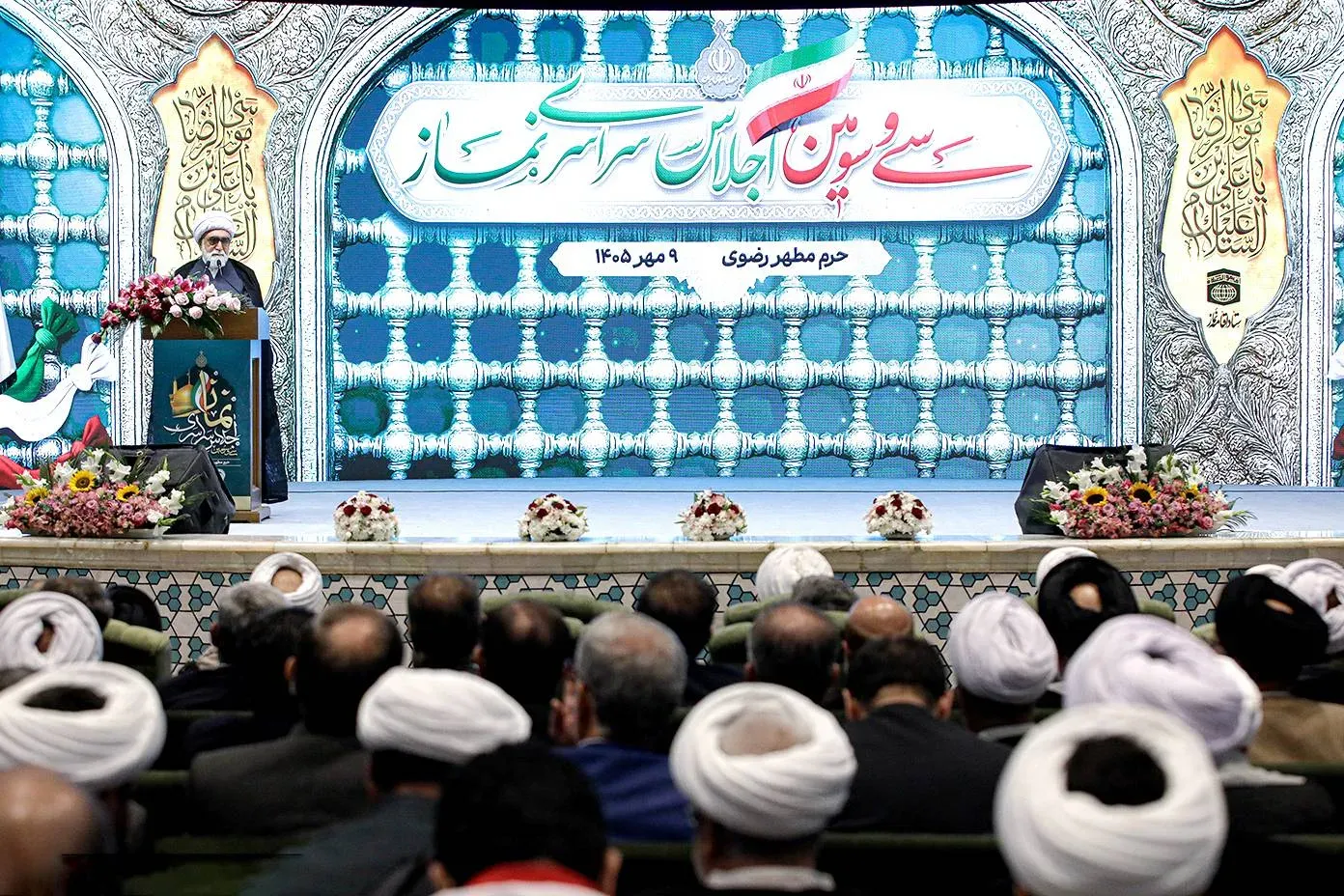
The Custodian of Astan Qods Razavi (AQR) emphasized that promoting prayer cannot be achieved through verbal advice alone, stating: “Worshipers must encourage others to establish prayer through their conduct, speech, and lifestyle, as people pay greater attention to the actions of the faithful than to their words.”
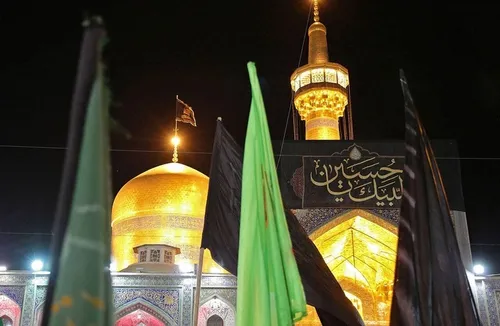
On October 1, Ayat. Ahmad Marvi, Custodian of Astan Qods Razavi (AQR), attended the 33rd National Prayer Summit at Quds Hall of the Imam Reza Shrine in Mashhad, northeastern Iran.
Referring to the messages sent by the martyred Leader of the Islamic Revolution, Ayat. Seyyed Ali Khamenei, to various editions of the National Prayer Summit, he said: “The Prayer Summit is the only summit to which the martyred Leader sent a message every year. This year, the summit began with a message from his worthy successor, Ayat. Seyyed Mojtaba Hosseini Khamenei, which is both a blessing for the summit and a clarification of the path ahead.”
Commemorating Sacred Defense Week, he added: “We honor the memory and names of the dear martyrs and the veterans and self-sacrificing people who played a role during the eight years of the proud Sacred Defense.”
The AQR Custodian also commemorated the Leader of the Resistance on the second anniversary of the martyrdom of the distinguished Resistance figure, Sayyed Hassan Nasrallah.
“As the Leader of the Islamic Revolution stated, he was the ‘heroic Arab commander’ and a great symbol of the Resistance Front. We honor the memory and name of this great martyr,” he said.
Reviewing the messages sent by the martyred Leader of the Islamic Revolution to the Prayer Summits over the years, Ayat. Marvi noted: “At the first summit, establishing prayer was regarded as the primary fruit and sign of a righteous government, and it was emphasized that prayer must occupy the most central place in people’s lives.”
He continued: “At the 1997 summit, the martyred Leader of the Islamic Revolution emphasized the importance of establishing prayer as one of the top priorities on the government’s grand agenda.”
The top official added: “In 2004, attention was drawn to the need to make maximum use of the capacities of art and literature in promoting prayer.”
Ayat. Marvi stated that the martyred Leader of the Islamic Revolution had described the Prayer Summit in his messages as a blessed and effective initiative.
He added: “At the same time, he emphasized the need for a realistic and wise assessment and stressed that following up on the results should be regarded as an important part of this initiative.”
He expressed his gratitude to Hoj. Mohsen Qara’ati for organizing the Prayer Summit and for his other initiatives, saying: “I thank Mr. Qara’ati for this initiative and his other endeavors. He is a sincere, hardworking, and motivated man whom I truly envy. Both in the Leader’s message today and in other messages from the great martyred Leader, this noble personality has been rightfully honored.”
Addressing efforts to explain the teachings of prayer, Ayat. Marvi stated: “Regarding prayer, it would be unfair to say that no work has been done in terms of content, Quranic teachings, and hadiths. A great deal of work has been done. Elders, scholars, mystics, writers, and authors have each, according to their capacity, written about prayer and the importance of this great divine duty and made their works available to the public.”
He added: “I think there is perhaps no shortage in terms of explaining the teachings, especially the teachings of prayer. It may not be the case that those who do not pray do so because they do not know its importance, such that if we gave them a few books to read, they would begin to pray. If that were the issue, the task would be very simple: We could compile and print books tailored to their needs and circumstances and make them available to them.”
The AQR Custodian called for an investigation into the causes of indifference toward prayer among a portion of society, stating: “Before anything else, dear clerics, educational experts, thinkers, sociologists, and psychologists must examine why there is indifference—even among a small portion of society—toward this great divine duty and what factors are involved. Is it only a lack of knowledge about this divine duty that has caused their indifference, or could other factors and issues also be involved?”
Ayat. Marvi identified the conduct of worshipers as one of the important factors in promoting prayer. “Perhaps one of the important issues in promoting prayer is for worshipers to pay closer attention to their own actions. There is a difference between saying prayers and establishing prayer. We say prayers, but do we establish prayer? My recommendation for promoting prayer is to advise worshipers to establish prayer,” he said.
Citing the Quranic verse, “Indeed, prayer prohibits immorality and wrongdoing,” he noted: “If we worshipers truly act upon this verse, a large number of those who do not pray will be encouraged to do so.”
He emphasized that worshipers must pay greater attention to the etiquette and conditions of prayer. “We must pay greater attention to the etiquette and conditions of prayer. Our actions, behavior, speech, and conduct as people who pray must be such that they encourage and urge others to perform their religious duties,” he added.
The AQR Custodian continued: “When a young person sees that I, as a worshiper, am no different from a person who does not pray in terms of speech, deeds, behavior, social and family conduct, and the way I interact with people, this can indirectly cause them to pay less attention to prayer.”
To illustrate the role of conduct in promoting religion, Ayat. Marvi pointed to the spread of Islam in India: “What caused Islam to expand and grow in India? What is written in books points to interactions between Iranian and Indian merchants. The people of India observed honesty, trustworthiness, good behavior, fulfillment of promises, and other positive moral qualities in Muslim merchants and were drawn to Islam. In this way, Islam entered India, and today hundreds of millions of Muslims live in that country. Perhaps books did not initially go to India; rather, it was the actions of Muslims that promoted Islam there.”
Regarding the condition and location of places of prayer, the AQR Custodian stated that while good measures have been taken, there is still a considerable distance to go to reach the desired situation.
“In many cities, mosques are still closed outside prayer times. Furthermore, roadside mosques are usually located on the outskirts and are not at an acceptable level in terms of space, hygiene, and basic facilities. This situation indirectly conveys the message that prayer does not have the necessary importance. Respect for the shrine comes from its custodian,” he said.
The AQR Custodian emphasized: “We must provide the best facilities for establishing prayer. We must provide the cleanest and most beautiful places for worshipers. Everything, from carpets and the cleanliness of the space to other facilities, must be worthy of prayer, because these actions indirectly convey the importance of prayer to society.”
Referring to the AQR’s experience in providing chadors for female pilgrims, he stated: “One of our programs at the Holy Shrine is to lend chadors to women who do not have one. We spend about seven billion tomans annually to provide chadors, and no woman enters the Holy Shrine without one.”
The AQR Custodian continued: “I visited the rooms where chadors were lent to pilgrims. I saw that these spaces lacked even the most basic facilities and were not in keeping with the beauty and architecture of the Holy Shrine. I told my colleagues that this very issue could indirectly convey the message that the chador is not important to the recipient. A pilgrim might think to herself that if the chador were important and valuable, a more appropriate place would have been designated for it at Astan Qods.”
He added: “We spent several billion tomans to create the best rooms for lending chadors and emphasized that these rooms must have beautiful architecture appropriate to the Holy Shrine. The loaner chadors must also be placed in beautiful and suitable cupboards. When a pilgrim returns a chador, it should not be discarded or thrown into a bin; rather, it should be received respectfully and placed in a proper location. We ourselves must respect and honor the chador so that a woman who is not wearing one is also indirectly encouraged to use it.”
The AQR Custodian identified action as the most important means of inviting people to religion: “Researchers and biographers have written that people did not generally become Muslim through the Prophet’s sermons, but rather by observing the Prophet’s actions and conduct. Whenever we speak about the Prophet and the Imams, guide people, and seek to strengthen the spirit of faith in them, we will continue to speak about the conduct of the Infallible Imams until the Day of Judgment. We do not have access to, or the ability to fully comprehend, the high and profound level of knowledge of the Infallible Imams, but descriptions of their simple, everyday conduct and behavior are attractive to people, and this appeal will remain until the Day of Judgment.”
Addressing the questions and doubts of the younger generation, Ayat. Marvi stated: “Young people have many issues, questions, and doubts. I am not saying that all these questions and doubts are valid and justified, and we should not ignore the poisonous arrows of the enemy in this regard; but this very issue makes our duty heavier. Young people expect action from us more than they expect words.”
Related News


Post comments
- Editor's suggestion
- Latest news
Decline of Takfiri movements indicates success in promoting Islamic unity
IRIU contributes to international publication on quantum security
Prayer promotion starts with worshipers’ conduct: Custodian
IRIU announces publication of international book on quantum security
AQR publishes Quran pages attributed to handwriting of Imam Hossein (AS)
Introductory “In’ash al-Aql” course concludes with head of AQR Quranic Center in attendance
AQR Custodian Offers Condolences on Passing of Grand Ayatollah Shobeiri Zanjani
Evaluation shows Imam Reza Intl. University has capacity to enroll more international students
Transparency in fulfilling donors’ intentions boosts public donations to AQR
Flag-changing ceremony held at Hazrat Masumeh Shrine
Nation’s most modern student dormitory inaugurated in presence of AQR Custodian
Inscriptions honoring Imam Hassan Askari birth anniv. installed at Imam Reza Shrine
Islamic Revolution’s message transcends national borders
6th Imam Reza International Congress concludes
Intl. scholars explore Razavi justice, resistance against structures of domination
Researchers explore the Ahl al-Bayt’s (AS) distinctive perspectives on justice
Imam Reza Congress, vital platform for strengthening unity of Islamic Ummah
African thinker highlights inseparable link between Razavi teachings, governance model of Martyred Leader
Martyred Leader’s martyrdom resonates across religious boundaries in Latin America
Imam Reza Shrine remains a focal point of convergence for nations, religions
Human rights defined through Imam Reza’s teachings, human dignity: Scholar
Campaigns