AQR Custodian urges comprehensive government planning for Imam Reza Shrine pilgrims
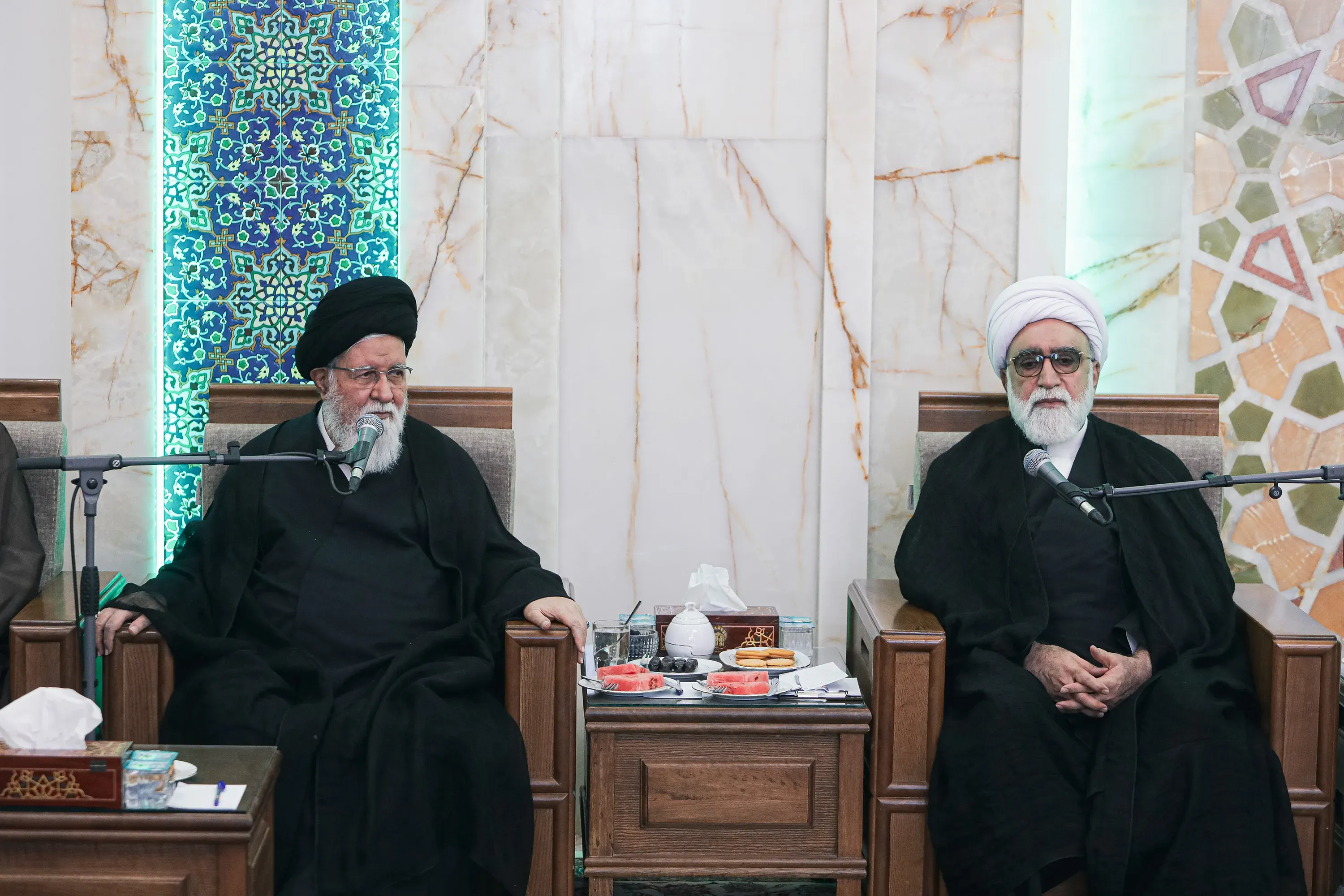
At a consultative meeting on preparations for the final ten days of Safar, the Custodian of Astan Qods Razavi (AQR), Ayatollah Ahmad Marvi, stressed the need for integrated government planning to improve services for pilgrims in Mashhad, northeast Iran.
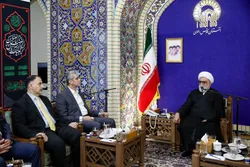
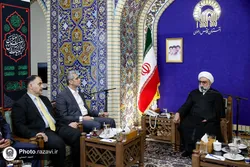
AQR Custodian, Ayatollah Ahmad Marvi, held a consultative session for the final days of Safar with the Representative of the Leader, the Governor of Khorasan Razavi Province, and urban officials at Imam Reza Shrine.
He expressed condolences for the mourning period and noted the improving quality of ceremonies in recent years, attributing this success to the grace of Imam Reza and the diligent efforts of officials.
“The National Pilgrimage Working Group has to play an effective role in religious and national occasions”, the custodian emphasized.
He called for macro-level decisions regarding inter-city and intra-city transport, housing, essential supplies, accurate statistical data, and increasing capacity for rail, bus, and air travel. He also called for oversight of ticket pricing and the improvement of road safety and service complexes.
“The working group's secretariat needs to consistently monitor pilgrimage issues throughout the year”, the top official highlighted.
He stated that urban transport development, security, media outreach, and guild performance oversight must be continuous to ensure the rights of pilgrims are not violated by unfair pricing, fraud, or poor service.
Ayatollah Marvi appreciated the paternal approach of Ayatollah Seyyed Ahmad Alamolhoda toward provincial issues, noting: “Attention has to be paid to pedestrian pilgrims during the final days of Safar. While maintaining the unique status of the Arbaeen march, service for those walking to Mashhad must remain a priority for responsible agencies”.
The Custodian of Astan Qods Razavi declared: “All provincial and urban managers are servants of the ‘City of Imam Reza’”.
He urged executive bodies to take pilgrim needs seriously, suggesting that a portion of the revenue generated from pilgrims should be reinvested into urban infrastructure and service quality.
AQR’s head clarified that the organization possesses sufficient capacity to manage the inner shrine independently and spends approximately 5 trillion Tomans annually on operations. “However, street improvements, parking, and urban services outside the shrine are the responsibility of the municipal management and state agencies”.
He criticized the long-standing delay in providing parking facilities, asking if the municipality could claim that pilgrims are not their responsibility. “Mashhad’s identity and economic prosperity are entirely derived from the presence of Imam Reza Shrine”.
On cultural issues, Ayatollah Marvi addressed the visible decline in decorum near the shrine, noting: “It causes distress to believers. AQR provides chadors at entry points, but other agencies fall short in maintaining public cultural standards”.
Elsewhere, representative of the Leader in Khorasan Razavi Province and Friday prayers leader of Mashhad, Ayatollah Seyyed Ahmad Alamolhoda, thanked officials for their conduct during the funeral of the martyred Leader, asserting: “Major events in Mashhad should be managed locally by officials familiar with the city's specific capacity and conditions, rather than outside entities, which were the root cause for previous coordination failures”.
He demanded that national planners entrust execution to local authorities. “Regarding the final days of Safar, the removal of traffic bottlenecks and the facilitation of pilgrim access, pilgrims should not be forced to walk excessive distances due to road closures. Better food supply management, including bread and daily necessities, are also of utmost importance”.
For his part, Khorasan Razavi Governor, Gholamhossein Mozafari, praised public participation in the recent mourning events, stating: “The martyrdom anniversary of Imam Reza possesses the capacity to become the country's largest religious gathering, comparable to Arbaeen in Iraq”.
Mozafari emphasized the importance of scientific assessment of religious events by AQR’s Islamic Research Foundation, universities, and seminaries.
“Specific planning is needed to ensure that the influx of millions of pilgrims is managed through high-quality, impactful, and centralized ceremonies in the future”, he concluded.
Related News
Post comments
- Editor's suggestion
- Latest news
Iran and Iraq form a united front against aggression, Iraqi organizer says
Ceremony honors Hussaini Mukibs at Imam Reza Shrine
Love for Ahl al-Bayt is an unbreakable bond between Iranian and Iraqi nations: Custodian
Imam Reza Shrine hosts ceremony honoring Iraqi Mukib operators
Iraqi Mukib operators voice brotherhood at Imam Reza Shrine
Festive atmosphere engulfs Imam Reza Shrine on Hazrat Zeinab’s birth anniversay
Imam Reza Shrine marks Hazrat Zeinab’s birth anniversary
Intl. architects unite to heal grief over Minab school martyrs
Requirements for Imam Reza International Congress assembly reviewed at Qom University
Engineering, maintenance, and restoration projects enhance pilgrim comfort at Imam Reza Shrine
Two Razavi servants from Markazi Province named among the world’s top 2% of scientists
Imam Reza Shrine’s English-speaking mourning group promotes the teachings of the Ahl al-Bayt (AS)
Tribes play key role in protecting national security, territorial integrity, economy: AQR Custodian
Deputy minister of cultural heritage, tourism and handicrafts visits AQR Central Library
Decline of Takfiri movements indicates success in promoting Islamic unity
IRIU contributes to international publication on quantum security
Prayer promotion starts with worshipers’ conduct: Custodian
IRIU announces publication of international book on quantum security
AQR publishes Quran pages attributed to handwriting of Imam Hossein (AS)
Introductory “In’ash al-Aql” course concludes with head of AQR Quranic Center in attendance
AQR Custodian Offers Condolences on Passing of Grand Ayatollah Shobeiri Zanjani
Campaigns