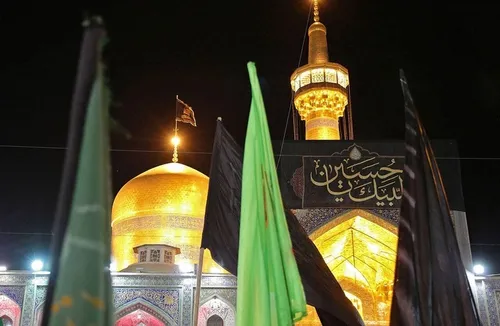
Imam Reza Shrine, world’s richest artistic treasury of Islamic civilization

The 2nd International Congress on Razavi Art School to convene with some 25 academic and cultural institutions in attendance.
The 2nd International Congress on Razavi Art School, slated for Feb. 16, 2026, is aimed at advancing scholarly discourse on sacred art with a focus on the legacy of Imam Reza.
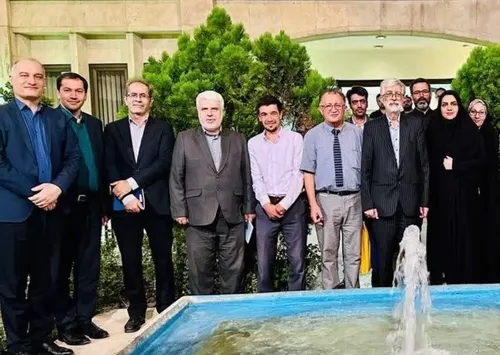
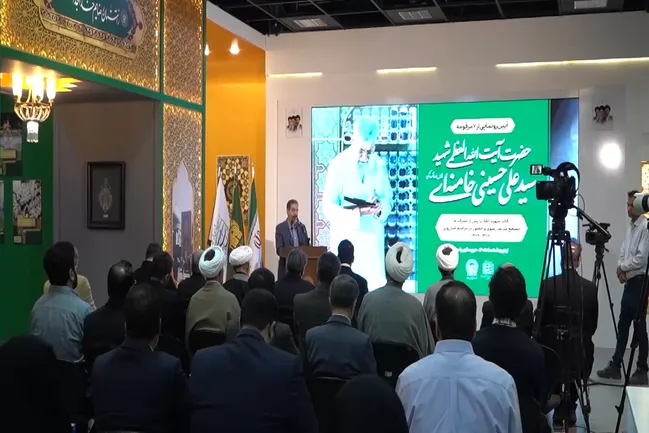
Details of the event were presented by Mohammad Javad Ostadi, member of the policymaking council and executive secretary of the congress, during a press briefing at Malek Library and Museum in Tehran.
“The first edition, held two years ago in Mashhad, resulted in publication of 51 selected papers. The new call for papers has been issued across five major themes: theoretical and philosophical foundations of Razavi art school, comparative studies on forming an art school centered on Imam Reza, strengthening intercultural dialogue in sacred arts, enhancing international standing of Razavi art within religious art discourse, and designing theoretical and practical models for global development”, Ostadi noted.
He added: “The congress also seeks to critique existing methodologies, document doctrinal elements, and expand scholarly criticism in Islamic art”.
The event is organized under the auspices of the Astan Quds Razavi Institute of Artistic Creations, in collaboration with major universities including the University of Art, Tarbiat Modarres University, Sooreh University, the University of Tabriz, and Shahed University.
The Ministry of Science has approved the event, and accepted papers will receive ISC academic credit.
The call for abstracts runs from November 20 to December 10, with results to be announced on December 25.
Full papers are due on January 14, 2026 while final evaluations will conclude on February 3, and the main congress will be held on February 16, 2026 in Mashhad.
Several pre-sessions are planned in Mashhad, Tabriz, Tehran, and an international session is being arranged for early February in either Qatar or Turkey.
Ostadi further emphasized: “There's a need for indigenous theory-building in Islamic art, and much of the field has been shaped by Orientalists”.
He highlighted the unifying capacity of Razavi art and the importance of cultural identity in artistic creation.
Elsewhere in the event, Amirmahdi Hakimi, CEO of Astan Quds Razavi Institute of Artistic Creations, described the shrine’s artistic treasury — from manuscripts to museum artefacts — as unparalleled in the Islamic world and requiring deep intellectual foundations.
Other speakers, including Hoj. Navab and Seyyed Reza Mousavi Gilani, stressed the need for scholarly engagement with the shrine’s vast collection and the enduring significance of ritual arts in Islamic civilization.
Related News

Post comments
- Editor's suggestion
- Latest news
IRIU, Ministry of Foreign Affairs forge scientific diplomacy ties
Future diplomats tour Imam Reza Shrine
Iraqi students visit Imam Reza Shrine
Razavi University, al-Mustafa International University launch joint cooperation center
Malek Museum unveils exhibition on devotion to Prophet Muhammad
Khorasan Razavi MPs support AQR development plans for Imam Reza Shrine
AQR research deputies strengthen international synergy
Darvazeh Bathhouse reflects Safavid-era history in Mashhad: Expert
Sunni influencer recalls shattered stereotypes during visit to Imam Reza Shrine
International Islamic Unity Conference continues strategic vision of Iran’s leaders
Iran is a unique model of peaceful coexistence: Muslim activist
Imam Reza Shrine plays pivotal role in Islamic unity: Bahraini scholar
40th Islamic Unity Conference concludes in Mashhad
40th Islamic Unity Conference concludes in Mashhad
Imam Reza Shrine adorned for birth anniv. of Prophet, Imam Sadiq
Arab pilgrims honor birth anniv. of Prophet, Imam Sadiq
Afghan collector donates rare stamps to AQR
Imam Reza Intl. University, Razavi University expand international cooperation
AQR Custodian meets martyr Larijani's family members
Intl. landscape design and memorial space competition for Shajareh Tayyebeh School martyrs' cemetery
Dust-cleaning ceremony held at Imam Reza Shrine
Campaigns