Ramadan war demonstrated power of Velayat-e-Faqih in safeguarding national dignity, unity: Custodian

The Custodian of Astan Qods Razavi says the Ramadan war demonstrated the power of Velayat-e Faqih (Guardianship of Islamic Jurisprudence) in preserving the dignity, cohesion, and strength of the country.
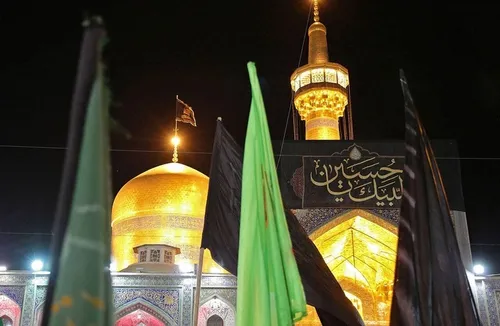
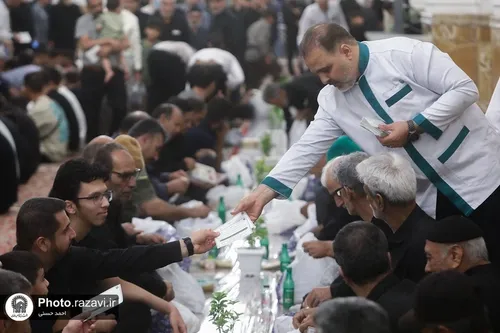
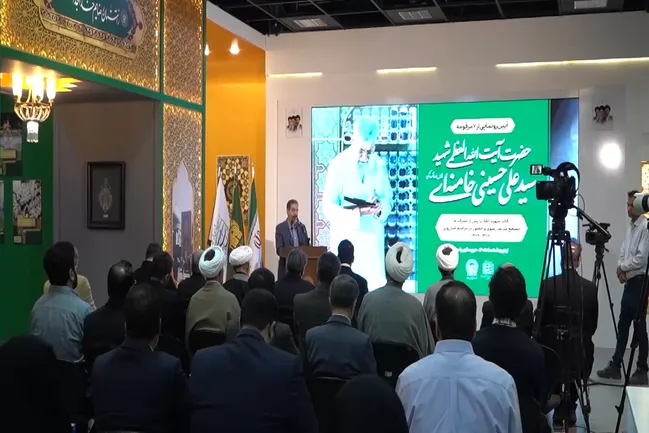
Ayat. Ahmad Marvi, the Custodian of Astan Qods Razavi (AQR), addressed the opening ceremony of the Karamat Ten-Day festivities at Imam Reza Shrine, northeast Iran, held in Enghelab Eslami Courtyard, with shrine servants and pilgrims in attendance.
Referring to a narration from Imam Reza, he explained: “The elevated position of Imamate is the foundation of religion and the source of dignity for Muslims”.
Citing a hadith from Imam Reza stating that ‘the Imam is the order of religion, the dignity of Muslims, the cause of anger for hypocrites, and the destruction of unbelievers’, AQR’s Custodian said: “Today these blessings are visible in society under the system of Velayat-e-Faqih, which is the continuation of Imamate”.
He added that this leadership has manifested itself in the country’s dignity, unity, and authority.
Ayat. Marvi also described the situation before the victory of the Islamic Revolution, stating: “Those ruling the country at that time aimed to remove religion from society step by step. The celebrations marking the 2,500‑year anniversary of the Persian monarchy was an effort to distance society from Islamic history and the life of the Prophet Muhammad (pbuh). The official calendar was even changed from Islamic to imperial, preventing the use of Islamic dates on gravestones”.
The top official stated: “Today, the world observes Iran’s dignity and power with admiration and many free nations and oppressed peoples regard the Iranian nation as a model. However, these achievements represent only the beginning of a broader civilizational process”.
Referring to the era before the Revolution, he said: “Rulers at the time surrendered parts of Iranian territory during conflicts. The separation of Bahrain from Iran during the reign of Mohammad Reza Pahlavi occurred without war, military confrontation, or even the firing of a single bullet, but rather under pressure from foreign powers”.
Ayat. Marvi said the country had been weakened to such an extent that foreign demands were implemented without the need for military threats. In contrast, he said: “Today, Iran confronts major powers with confidence and resilience”.
He stated that despite attacks and acts of violence against the Iranian nation, including the killing of civilians and military aggression, the attackers failed to achieve their objectives. “Under Velayat-e-Faqih, the Iranian nation has gained such dignity that it does not fear threats and cannot easily be defeated”.
Referring to threats made by the U.S. President Donald Trump against Iran, he asserted: “Stated goal of pushing Iran back to the “Stone Age” had not been realized. Although damage was inflicted, the country’s adversaries ultimately failed to achieve their aims”.
He described this outcome as a humiliation for a power that once intimidated the world with military strength. According to him, “Iran has faced economic pressure, sanctions, war, terrorism, attempts to create insecurity, and efforts to incite unrest, yet these actions have yielded no results other than failure for its opponents”.
“In the final days of the confrontation, the United States attempted a special operation aimed at removing enriched uranium from Iran to claim a strategic achievement, but the effort failed”, the Custodian of Astan Qods Razavi said.
He compared the outcome to the failed U.S. military operation in Tabas in 1980, describing it as another instance of humiliation for Washington.
He attributed these successes to prayers and spiritual devotion, including appeals to Imam Mahdi, Imam Reza, and the Ahl al‑Bayt, which he described as the nation’s spiritual assets.
The top official also referred to the resilience of the political system established under the leadership of the founder of the Islamic Revolution and the martyred Leader, saying: “The system’s structure allows governance and defense to continue even in the face of major crises”.
Addressing the Iranian people, Ayat. Marvi urged them to maintain their presence in society, describing public participation as a vital factor in national strength. “Victory would be achieved when adversaries abandon any intention of aggression against Iran and cannot impose instability on the country”.
He emphasized that the battlefield and diplomacy represent two sides of the same strategy, saying: “At times, national leadership determines that direct confrontation is necessary, while at other times diplomacy serves the country’s interests, and both approaches complement each other”.
He also stressed the importance of following national leadership and maintaining unity. He expressed confidence in government officials, military and security forces, and the country’s negotiating team, while warning that adversaries seek to create divisions within Iranian society through psychological warfare.
He concluded by warning: “Soft war and psychological operations pose a greater threat than direct military attacks because they target people’s beliefs and perceptions”.
Related News


Post comments
- Editor's suggestion
- Latest news
IRIU, Ministry of Foreign Affairs forge scientific diplomacy ties
Future diplomats tour Imam Reza Shrine
Iraqi students visit Imam Reza Shrine
Razavi University, al-Mustafa International University launch joint cooperation center
Malek Museum unveils exhibition on devotion to Prophet Muhammad
Khorasan Razavi MPs support AQR development plans for Imam Reza Shrine
AQR research deputies strengthen international synergy
Darvazeh Bathhouse reflects Safavid-era history in Mashhad: Expert
Sunni influencer recalls shattered stereotypes during visit to Imam Reza Shrine
International Islamic Unity Conference continues strategic vision of Iran’s leaders
Iran is a unique model of peaceful coexistence: Muslim activist
Imam Reza Shrine plays pivotal role in Islamic unity: Bahraini scholar
40th Islamic Unity Conference concludes in Mashhad
40th Islamic Unity Conference concludes in Mashhad
Imam Reza Shrine adorned for birth anniv. of Prophet, Imam Sadiq
Arab pilgrims honor birth anniv. of Prophet, Imam Sadiq
Afghan collector donates rare stamps to AQR
Imam Reza Intl. University, Razavi University expand international cooperation
AQR Custodian meets martyr Larijani's family members
Intl. landscape design and memorial space competition for Shajareh Tayyebeh School martyrs' cemetery
Dust-cleaning ceremony held at Imam Reza Shrine
Campaigns