A Lasting Legacy: Martyred Leader Ayatollah Khamenei's Gifts and Endowments to Astan Qods Razavi
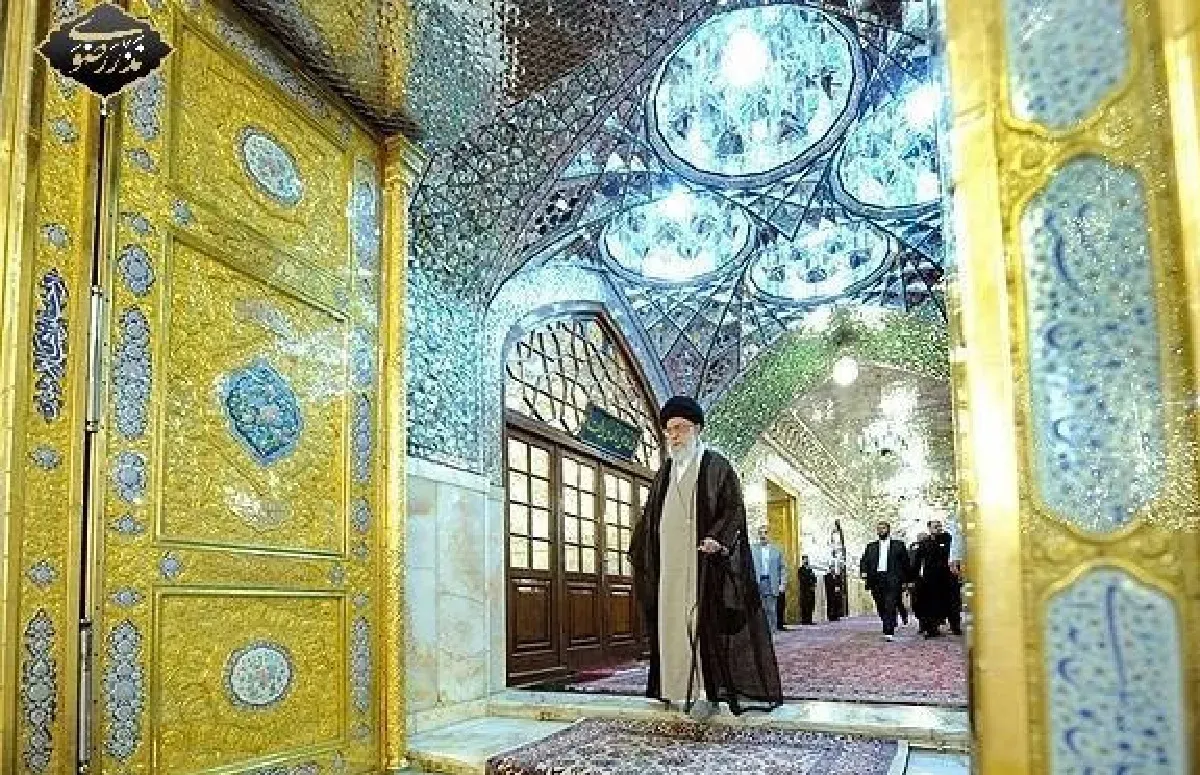
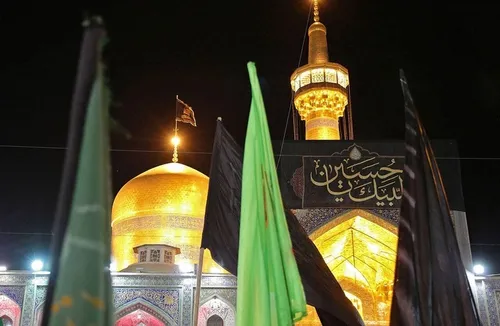
Participating in the dust-cleaning ceremony of holy shrine of Imam Reza (AS), delivering speeches that chart nation's course at the start of each New Year, periodic pilgrimages, and marking beginning of the New Year from Imam Reza shrine all demonstrate boundless devotion and attachment of the Martyred Leader of the Islamic Revolution to Ali ibn Musa al-Reza (AS).
The resolute and powerful commander of the Islamic Republic of Iran grew up in the vicinity of Imam Reza (AS), and for a long period, he carried proud flag of the Islamic homeland to the peaks of glory.
Leadership era of the Martyred Leader Ayatollah Seyyed Ali Khamenei (may God sanctify his soul) brought numerous achievements for Islamic Iran and the front of truth. During his leadership and following his special attention to Astan Qods Razavi and his provision of necessary advice to the esteemed custodians, the splendor of the holy shrine, the services of the complex, and the introduction of Razavi culture and conduct always experienced astonishing progress.
The Martyred Leader of the Islamic Revolution also assigned important duties to the managers of Astan Qods Razavi regarding development of organization’s museum and the preservation of ancient artifacts and valuable manuscripts. He was also a pioneer in this path in a way that he dedicated and donated numerous valuable works to the Astan Qods Razavi.
A forward-looking vision, founder of an enduring legacy
Even during his years in the highest political office of the country, he always remained devoted to Imam Reza (AS) and traveled to Mashhad several times a year. The Martyred Leader's special emphasis on preserving valuable historical artifacts and manuscripts in Astan Qods Razavi stemmed from two considerations.
First, with his insightful and forward-looking perspective, he believed that valuable and identity-bearing works must be preserved for future generations. Second, he placed particular trust in the museum and treasury of Astan Qods Razavi, considering this vast institution the safest entity for preserving donated items.
Throughout his tenure as leader of the Islamic Revolution, he consistently paid special attention to the act of dedicating and donating to the Razavi holy shrine. He donated a major portion of valuable gifts and precious data-x-items he received over the years.
The volume and number of gifts from Martyred Leader of the Revolution increased so much over the years that a section titled "The Supreme Leader's Gifts Treasury" was established within the holy shrine's depository, where data-x-items sent from his office are kept.
Paving the way for research studies
The collection of gifts from the Martyred Leader of the Revolution numbered nearly 1,700 data-x-items by early 1404 SH, each embodying two meanings.
Every donated item possesses identity, history, and high material value, and its preservation aids scientific-historical research, facilitating the work of scholars and researchers in this field. Additionally, it represents a rich resource for future generations. The second meaning embedded in these works clearly and powerfully reveals the Martyred Leader Ayatollah Khamenei's profound love for Imam Reza (AS).
A diverse and multifaceted treasure
The gifts and offerings of Martyred Leader Ayatollah Khamenei to Astan Qods Razavi possess remarkable diversity and are classified into several categories. Weapons, valuable paintings, carpets and rugs, decorative items, statues, vases, manuscripts, calligraphy works, embossed prints, digital and analog devices used in various fields, tablets, various medals, books, wooden artifacts, antique vessels, various clocks, models of specific historical sites, precious data-x-items made of gold and silver, exquisite objects belonging to the holy shrines of Imams (AS), collections of coins, historical banknotes, pottery, sculptures, precious stones, stamp albums, antique and valuable paintings, books, Qurans, leather goods, and local musical instruments are among the most important categories of data-x-items donated by the late leader of the Islamic Revolution.
Notable data-x-items donated by Martyred Leader of the Islamic Revolution
These include 45 data-x-items donated to Astan Qods Razavi from 1993 to 2023. These include a pictorial rug depicting the Era of Ashura; a three-dimensional volumetric model of Imam Khomeini (RA); a sword with an engraved blade and a gold-plated, jewel-studded scabbard; a stamp album from the Islamic Republic of Iran Post Company; a lattice-work and inlaid wooden bookstand (Rahl) made of monolithic marble; flag of the Everest conquerors; and a copper tablet inscribed with Surah Al-Hamd in black-naskh Siyaq-Mashq calligraphy.
Other examples include a table clock with symbols of various religions; a model of the door of the Holy Kaaba; a brass panel depicting the events of Ashura; a silk “Mihrabi Guldani” (arched floral) rug titled “The Blessed Tree”; a traditional Iranian athletic championship belt; a three-piece engraved wooden cane “with portraits of Iranian and world luminaries”; a set of 14 medals from Scientific Olympiads; a pictorial rug depicting the map of the Islamic Republic of Iran; an agate ring with a silver mount and wooden frame; transcriptions of several Surahs of the holy Quran on stone pages in Sols script with a leather cover; a 50,000-rial banknote with the first serial number; and a fragment of a meteorite found in Namibia.
Additionally, a gold commemorative medal from the 2008 Beijing Olympics; a Chinese teapot with two cups and saucers with gold glaze; a book of traditions of prophet Mohammad (pbuh) with a wooden cover; a 1-gram gold coin (first minting of the National Bank); a set of 5,000-rial coins; a traditional musical instrument from Burundi; a type of eight-stringed Tar (lute); an intricately inlaid wooden cane decorated with portraits of 20 famous Iranian luminaries and poets; a gold-colored table clock with a horse statue, made in England; a piece of tile from the holy shrine of Imam Ali (AS); an image of the Zarih of Shah Cheragh on a tile; a painting of African musicians; and a commemorative plaque of Mirza Kuchak Khan Jangali.
Furthermore, two seven-colored tiles from shrine of Imam Hossain (AS) bearing the inscription “Ya Bab al-Hawa'ij”; a decorative frame combining ivory, gold, and paper; a lattice-work panel of the Asma al-Husna (Beautiful Names of God) on silver-toned metal; a calligraphy panel of Salawat (blessings) upon Imam Reza (AS); a poster and commemorative stamp album marking the anniversary of the victory of the Islamic Revolution of Iran; a "Gol-o-Mo rgh" (flower and bird) painting and a miniature of Ghadir; a wooden panel adorned with inscriptions of divine names and Quran with floral motifs; a handwoven carpet panel embellished with noble verse “Wa'tasimoo bi-hablillah..”" (And hold firmly to the rope of Allah...); a bronze relief panel titled "Symbol of Vietnamese Architecture"; a fabric covering from the noble shrine of the holy Prophet (pbuh); a panel decorated with Ayat al-Kursi; a metal sword engraved and decorated with turquoise; and a panel containing a piece of blessed covering of the noble shrine of Imam Reza (AS) are among other notable data-x-items donated by the Martyred Leader.
A museum that endures forever
Following donation of valuable data-x-items by the Martyred Leader of the Islamic Revolution and continuation of this practice, managers of the Astan Qods Razavi established a dedicated museum in the 1990s to display these objects. The Museum of the Supreme Leader's Gifts was inaugurated in February 1995.
Due to abundance and significance of the works and with the aim of increasing satisfaction of pilgrims and visitors, Treasury of the Supreme Leader's Gifts was expanded in 2009 and 2016 to an exhibition area of 1,314 square meters, where new and digital technologies are also utilized.
Martyred Leader's interest in manuscripts
In addition to the data-x-items donated by the Martyred Leader Ayatollah Khamenei, he was also a pioneer in procuring and donating manuscripts and valuable books to the shrine's library. He ranks among the endowers and donors who contributed most books and manuscripts to historic library of Astan Qods Razavi. This inclination of the Martyred Leader stemmed not only from his devotion to Imam Reza (AS) but also from his love of culture and his interest in literature.
The Supreme Leader of the Revolution dedicated or donated a total of over 11,000 valuable manuscripts to the holy Razavi shrine.
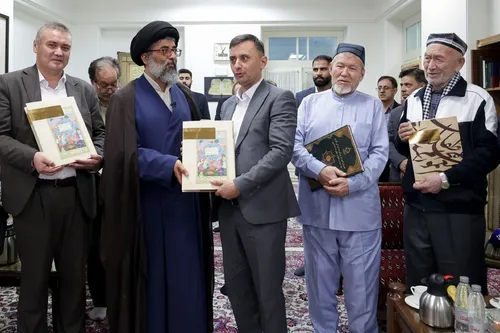
Collection of 1,500 manuscripts belonging to late Ayatollah Seyyed Mostafa Safaei Khansari was one such exquisite collection. After his passing in 1994, it was purchased from his heirs through the efforts of the Martyred Leader of the Revolution and donated to the Central Library and Documentation Center of Astan Qods Razavi.
Another collection acquired and donated to the Astan Qods Razavi Library through the efforts of the Martyred Leader is the exquisite collection of manuscripts from the library of late Ayatollah Kalbasi.
The treasury of manuscript copies donated by Martyred Leader of the Islamic Revolution covers 35 subjects including Quranic sciences, interpretation (Tafsir), jurisprudence (Fiqh) and its principles (Usul al-Fiqh), Hadith and traditions, theology and beliefs, philosophy and wisdom, logic, lexicography, rhetoric, supplications (Ad'iyah), ethics, mathematics, music, astronomy, astrological rulings, medicine and related sciences, Arabic literature, Persian poetry and prose, history and geography, alchemy, encyclopedias and bibliography, biographies (Tarajim), narrators' criticism (Rijal), Hadith methodology (Dirayah), stories, arts and crafts, natural and comparative sciences, and others.
Post comments
- Editor's suggestion
- Latest news
Imam Reza Shrine holds mourning ceremonies to mark martyrdom anniversary of Hazrat Fatima
University of Qom hosts meeting to review preparations for specialized session of Imam Reza International Congress
Razavi manuscript treasury keeps Quran attributed to Imam Hussein (AS)
AQR Custodian urges elite youth to link science with divine gratitude
Top elite students, top national exam scorers honored at Imam Reza Shrine
Top exam scorers and science Olympiad medalists meet AQR Custodian
Top national exam stars, academic elites visited Imam Reza Shrine
Iran and Iraq form a united front against aggression, Iraqi organizer says
Ceremony honors Hussaini Mukibs at Imam Reza Shrine
Love for Ahl al-Bayt is an unbreakable bond between Iranian and Iraqi nations: Custodian
Imam Reza Shrine hosts ceremony honoring Iraqi Mukib operators
Iraqi Mukib operators voice brotherhood at Imam Reza Shrine
Festive atmosphere engulfs Imam Reza Shrine on Hazrat Zeinab’s birth anniversay
Imam Reza Shrine marks Hazrat Zeinab’s birth anniversary
Intl. architects unite to heal grief over Minab school martyrs
Requirements for Imam Reza International Congress assembly reviewed at Qom University
Engineering, maintenance, and restoration projects enhance pilgrim comfort at Imam Reza Shrine
Two Razavi servants from Markazi Province named among the world’s top 2% of scientists
Imam Reza Shrine’s English-speaking mourning group promotes the teachings of the Ahl al-Bayt (AS)
Tribes play key role in protecting national security, territorial integrity, economy: AQR Custodian
Deputy minister of cultural heritage, tourism and handicrafts visits AQR Central Library
Campaigns