Imam Reza breathed life into ancient Iranian civilization: Custodian
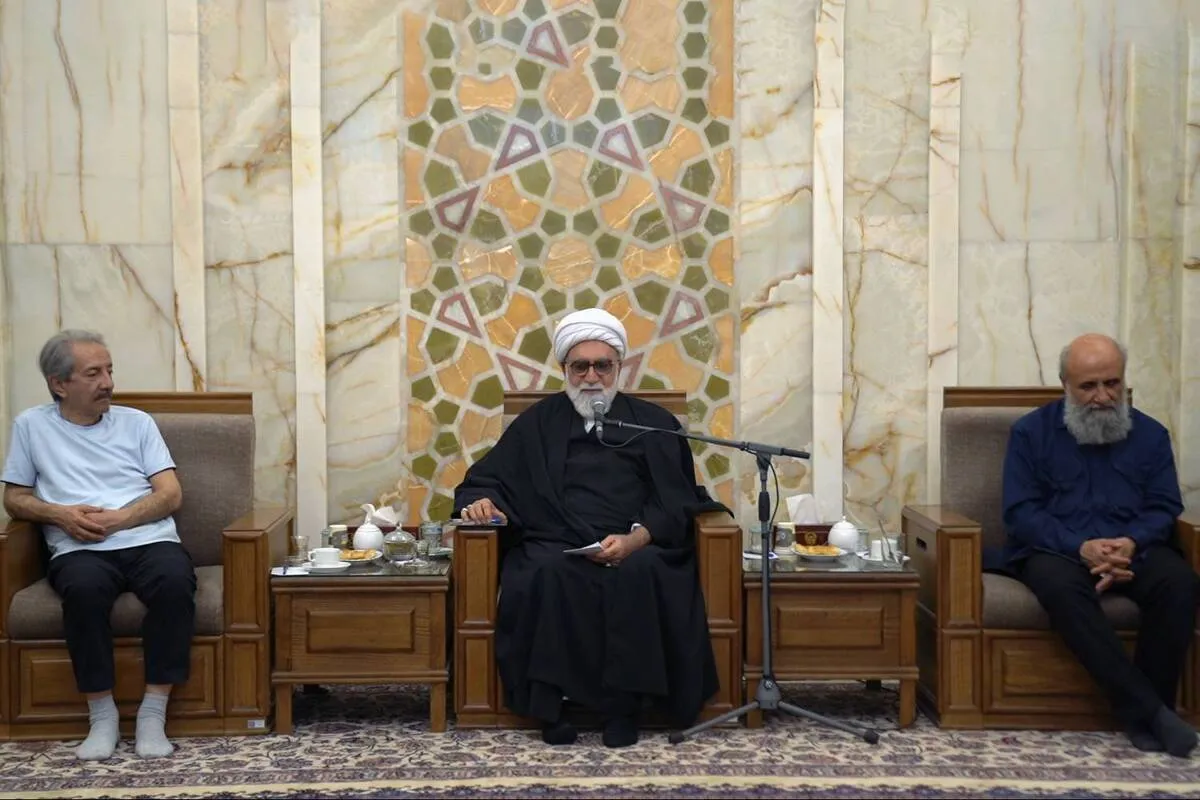
Calling on artists to help introduce Iranian civilization and Shia culture to the world, the Custodian of Astan Qods Razavi (AQR) says presence of the 8th Imam revitalized Iran’s ancient civilization.
According to Ayat. Ahmad Marvi, the Custodian of Astan Qods Razavi, “Although Iran possessed a valuable, rich and ancient civilization, it was the blessed presence of the 8th Shia Imam that breathed spirit and vitality into this great and age‑old civilization and truly revived Iranian civilization”.
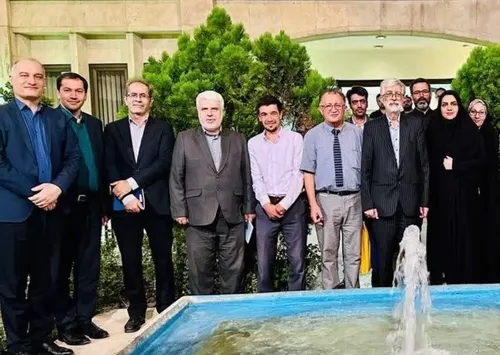
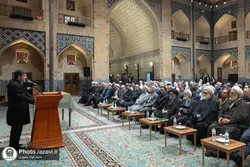
Ordibehesht 1 (April 21) in the country’s official calendar is named after Saadi Shirazi, the renowned Iranian poet known as the master of eloquence and a figure deeply rooted in culture and art. This year, the coincidence of that day with the third day of the Karamat Ten‑Day festivities created an opportunity for a number of cultural and artistic figures active in themes attributed to Imam Reza to gather at the reception hall of Great Prophet courtyard at Imam Reza Shrine, in the northeastern Iranian city of Mashhad.
In a warm and spiritual atmosphere, these cultural and artistic figures met with the AQR’s Custodian and shared their views and requests regarding the use of artistic capacities to promote and expand Imam Reza’s culture and teachings. The meeting also allowed artists devoted to Imam Reza to express their devotion to the Eighth Imam and present suggestions aimed at strengthening artistic, cultural and spiritual activities related to Imam Reza Shrine.
Ayat. Marvi, congratulated the participants on the Karamat Ten‑Day festivities and expressed satisfaction with the gathering of artists devoted to Imam Reza’s culture. He also commemorated the martyred Leader and discussed aspects of his personality and cultural outlook.
According to the top official, “Perhaps one of the distinguishing characteristics of our martyred Leader compared with many other respected clerics was his comprehensiveness, accurate vision and realistic approach, as well as his mastery in fields beyond purely clerical matters. These characteristics made him a unique personality.”
He added that time must pass for the dimensions of the martyred Leader’s character to become more widely recognized both within society and internationally.
Referring to the installation of calligraphic panels near the sacred burial chamber of Imam Reza, Ayat. Marvi recalled: “During the coronavirus pandemic, when the presence of pilgrims in the Imam Reza Shrine was limited, an opportunity arose to install calligraphic panels at the lower section surrounding the sacred burial chamber. For this purpose, and in line with the views of the martyred Leader, poems by Master Ghafurzadeh Shafagh were selected.”
He explained that after visiting the poet and receiving several poems, the works were presented to the martyred Leader, who selected the final pieces. “Based on his views, the chosen poems were then installed in the designated area around the sacred burial chamber”.
While praising the artistic beauty of these calligraphic works, the Custodian of Astan Qods Razavi noted: “Many pilgrims and residents have said the inscriptions are difficult for ordinary people to read and understand. I therefore asked artists and cultural figures to offer solutions so that pilgrims and visitors can more easily understand and benefit from the meaningful content of these artistic panels”.
Ayat. Marvi emphasized that the presence of Imam Reza in Iran had a transformative effect on the country’s civilization, stating: “Although Iran possessed a valuable ancient civilization, the blessed presence of the eighth Imam breathed spirit and vitality into this great civilization and revived it.”
Criticizing remarks made by the US president Donald Trump about destroying Iranian civilization, he said: “Recent public gatherings and nightly assemblies across the country demonstrate the vitality and strength of Iranian civilization”.
AQR’s head noted that what stands today against Iranian civilization is the defeated Western and American civilization, which represents exploitation of human beings, moral corruption, immodesty, greed and plunder.
According to Ayat. Marvi, authentic Iranian civilization rooted in Islamic values continues to play a dynamic and influential role in shaping the lives and worldview of the Iranian people.
Referring to recent regional developments and the resistance of the Iranian nation, he stated that the world’s attention has increasingly turned toward Iranian culture and civilization. He maintained that this situation has created an important opportunity to introduce Shi’a teachings and the depth of Iranian cultural heritage.
Ayat. Marvi pointed out that enduring works of Iranian literature such as Ferdowsi’s Shahnameh, Hafez’s Divan and Saadi’s Golestan and Bustan have remained influential across the world for centuries because they are deeply inspired by the Holy Quran and the teachings of Ahl al‑Bayt.
He added that Iranian men and women draw inspiration from Imam Ali, the Ahl al‑Bayt, Hazrat Fatima, and Hazrat Zaynab in standing firmly against oppression and injustice.
Ayat. Marvi stated that Iranians follow the path of Hazrat Zaynab, who confronted oppression through the power of speech and courage, humiliating tyranny despite its apparent power.
He emphasized that the resistance and bravery demonstrated by the Iranian nation have created an opportunity to present Iranian civilization and Shia beliefs more effectively to the world.
“The world is eager to learn about this civilization and this school of thought,” Ayat. Marvi said. “Artists should use their artistic abilities and creative capacities to introduce and preserve these valuable themes in effective and appealing artistic formats.”
He also stressed the importance of making greater use of the artistic and cultural capacities of the Imam Reza Shrine and called on artists to help expand cultural activities such as poetry gatherings, artistic productions, storytelling sessions and intellectual dialogues related to Imam Reza’s culture.
During the meeting, several cultural and artistic figures also shared their views.
Master Masoud Najabati highlighted the rich artistic and manuscript collections of Astan Qods Razavi and stressed the importance of making these resources more accessible to artists and researchers. He also noted that some visual arts, particularly architecture and environmental design, have not received sufficient attention.
Actor Atabak Naderi stated that any artistic work promoting human dignity and Islamic values can be considered a Razavi work and should not be viewed as seasonal or limited to specific occasions.
Master Sadegh Karamyar praised the cultural achievements of Astan Qods Razavi and emphasized the need for inclusivity so that people from different intellectual and artistic backgrounds can participate in cultural activities related to Imam Reza.
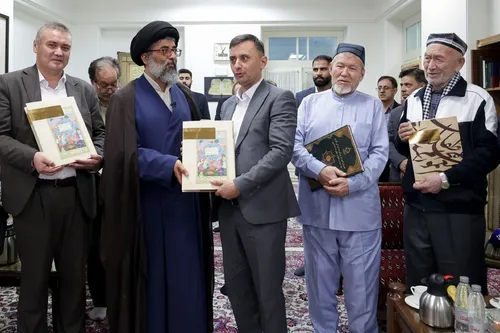
Master Hassan Rouholamin, a renowned visual artist, offered a number of his artworks to Imam Reza Shrine and stressed the importance of using national artistic capacities to portray the courage, resistance and spiritual identity of the Iranian people.
According to poet Saeed Biayabanaki: “Although poetry praising Imam Reza has grown significantly in recent years, greater efforts are needed to introduce these works to broader audiences”.
Also speaking in the event, Dr. Ebrahim also announced the establishment of a new hall dedicated to interfaith dialogue and intellectual exchange. He explained: “A five‑volume scholarly work on Imam Reza’s debating methods will soon be unveiled during an international congress”.
At the end of the gathering, Master Ghafurzadeh Shafagh recited a poem in praise of Imam Reza, bringing the meeting to a spiritual conclusion.
Related News

Post comments
- Editor's suggestion
- Latest news
Decline of Takfiri movements indicates success in promoting Islamic unity
IRIU contributes to international publication on quantum security
Prayer promotion starts with worshipers’ conduct: Custodian
IRIU announces publication of international book on quantum security
AQR publishes Quran pages attributed to handwriting of Imam Hossein (AS)
Introductory “In’ash al-Aql” course concludes with head of AQR Quranic Center in attendance
AQR Custodian Offers Condolences on Passing of Grand Ayatollah Shobeiri Zanjani
Evaluation shows Imam Reza Intl. University has capacity to enroll more international students
Transparency in fulfilling donors’ intentions boosts public donations to AQR
Flag-changing ceremony held at Hazrat Masumeh Shrine
Nation’s most modern student dormitory inaugurated in presence of AQR Custodian
Inscriptions honoring Imam Hassan Askari birth anniv. installed at Imam Reza Shrine
Islamic Revolution’s message transcends national borders
6th Imam Reza International Congress concludes
Intl. scholars explore Razavi justice, resistance against structures of domination
Researchers explore the Ahl al-Bayt’s (AS) distinctive perspectives on justice
Imam Reza Congress, vital platform for strengthening unity of Islamic Ummah
African thinker highlights inseparable link between Razavi teachings, governance model of Martyred Leader
Martyred Leader’s martyrdom resonates across religious boundaries in Latin America
Imam Reza Shrine remains a focal point of convergence for nations, religions
Human rights defined through Imam Reza’s teachings, human dignity: Scholar
Campaigns